'Johnny Carson' by Henry Bushkin
In 1896, poet Paul Laurence Dunbar wrote, "We wear the mask that grins and lies." Johnny Carson wore his mask well.
This book is not a biography but a memoir of the 18 or so years the author served as Carson's attorney, highly-rewarded gofer and confidante. In the 1970s and '80s, Carson was the country's highest-paid entertainer; his monologues and jokes fueled the next day's water cooler discussions in offices across America. Including mine. Johnny was charming and hilarious. My wife and I were regular viewers of 'The Tonight Show.'
Offstage, Carson was inscrutable and private. In Buskin's book, we learn that Johnny was mercurial, petty and often cruel when the cameras were turned off. Carson was a lonely, dysfunctional man - a habitual womanizer, big drinker, and, too often, a nasty drunk. It is sad to learn that seemingly carefree entertainers who bring us joy are too-often full of flaws.
It's unfortunate that the King of Late Night never found the fun-filled happiness that he brought to his television audience every night. I highly recommend this book. (posted 12/19/13, permalink)
'The Brotherhood: America's Next Great Enemy' by Eric Stakelbeck
This is a powerful and frightening indictment of the Muslim Brotherhood and their jihadist allies and offshoot groups. Who knew there was an enclave of anti-American Muslims planning the ultimate caliphate in the scenic Poconos of Pennsylvania?
Author Stakelbeck presents a well-documented read on one of the world's greatest threats to our God-given freedoms. Hiding behind a cloak of respectability and expensive Western suits, the Muslim Brotherhood keeps busy installing vehemently anti-American governments throughout the Middle East. As one of the big cheerleaders for the 'Arab Spring', the Obama administration has does everything it can to put the Brotherhood on the threshold of power. The author has some bad things to say about the Red Cross, too.
This book demonstrates how Islamists have used liberals and media against the rest of us. Each chapter was an eye-opener.
Verdict: Everyone should read this book. (posted 12/11/13, permalink)
'Things That Matter: Three Decades of Passions, Pastimes and Politics' by Charles Krauthammer
Winner of the Pulitzer Prize and considered one of the most influential - and brilliant - commentators in America, Charles Krauthammer has produced an insightful and educational book. Composed mostly of opinion columns written over the past 30 years, chapters are mercifully short - a good thing, because readers will often want to put the book aside and ruminate on the ideas conveyed in Charles' deep, thought-provoking musings.
His views on feminism, embryonic research, evolution and the death penalty defy ideological slotting. Yes, there are opinions about political matters but it was wonderful to also find essays on border collies, Halley's Comet, IBM's Big Blue, Woody Allen and Winston Churchill. Charles' defense of Israel is insightful, factual and unsettling, given the implication that we seem to be devolving into that old Hitler-era chestnut that Jews are an evil nuisance.
The best of Krauthammer's intelligence, erudition and dry wit are packed into this 365-page wonder. Highly recommended. (posted 12/5/13, permalink)
'Bull By The Horns: Fighting to Save Main Street from Wall Street and Wall Street from Itself' by Sheila Bair
As former Chairman of the FDIC (Federal Deposit Insurance Corporation), Bair had a somewhat prominent role in the government's response to the financial crisis of 2008, including bolstering public confidence and insuring system stability that resulted in no runs on commercial and thrift bank deposits.
While the book offers a detailed - too detailed and off in the weeds sometimes - story of the meltdown of Wall Street's largest institutions and the bailouts made to them, there was an 'everybody's picking on me undertone' which Ms. Blair sprinkled throughout the book. Sheila appears to harbor gobs of ill will towards others, especially the duplicitous Tim Geitner, but also nearly all the financial regulatory entities except, of course, the FDIC.
The book is too long, too self-serving and very dry in spots. I found that 'Panic: The Betrayal of Capitalism by Wall Street and Washington' by Andrew Redleaf and Richard Vigilante was far more readable. (posted 11/27/13, permalink)
'The Kennedy Half-Century: The Presidency, Assassination, and Lasting Legacy of John F. Kennedy' by Larry J. Sabato
Released in October, just in time for the 50th anniversary of the assassination, this book - written by Larry J. Sabato, University of Virginia Center for Politics Director and a frequent guest of Fox News - is a thorough look at JFK, including the way his legacy has strongly influenced the policies and decisions of every president since.
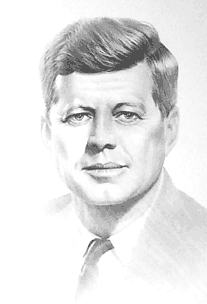
A recent poll reported in the book sheds light on John F. Kennedy's importance to Americans 50 years after his death. The survey found JFK to be, by a wide margin, the most esteemed president since 1953. 52% of Republicans and 79% of Democrats in have named Kennedy as one of America's best leaders.
Sabato examined the assassination itself and the many still-unanswered questions which remain. His book doesn't pull any punches and offered a balanced a fair look at the flawed Warren Commission report. The author did not portray JFK as a saint; his erroneous decisions, personal failings and hidden health problems are presented in great detail, yet the book remained an enjoyable page turner.
Overall this is a far better and more detailed book than O'Reilly's 'Killing Kennedy'. Highly recommended. (posted 11/21/13, permalink)
'Nothin' But Blue Skies: The Heyday, Hard Times, and Hopes of America's Industrial Heartland' by Edward McClelland
This book is an attempt to chronicle the decline of America's industrial Rust Belt over the last 35 years - the closing of factories, the decay of society and the decline of entire towns. This is a grim and dismal book - part fact, part opinion and part Studs Terkelesque interviews. Within it are stories of battles between myopic unions and companies willing to shutter profit-threatened factories and move work elsewhere in a quest for maximum shareholder gain. And workers who turn to alcohol or drugs rather than find new work or learn a new skill.
The author offers some interesting content but suffers from two major flaws: First, the McClelland displays a blatant liberal bias. He attributes Detroit's demise and the decline of other cities to "a decade of Republican neglect for urban America," failing to acknowledge that Motown and other burgs of urban blight are products of many decades of oft-corrupt Democratic rule. For example, Detroit has been led by a black Democratic mayor and black Democratic city council for 40 years.
Rep. John Conyers (D-Michigan), whom the Detroit News has called "part showman, part junkyard dog, part evangelist," continues to be dogged by scandal.
Camden New Jersey, another post-industrial wasteland, hasn't had a Republican mayor since 1936.
McClelland makes sure that he takes several shots at Ronald Reagan in his 300-plus page book. He seems to think that the President's firing of striking air traffic controllers was an anti-union mortal sin. Of course, in 1981, the author was still in grade school and wasn't an adult frequent business flyer like me.
The second problem is that the McClelland offers selective woe-is-me vignettes. He seems less worried about jobs being exported overseas than he does about jobs moving to the non-union South. You won't find success stories like that of Toyota of Georgetown Kentucky, which now employs over 6,000 people and continues to expand and add workers. While several chapters are devoted to the closing of steel mills, the revival and expansion of other mills - over two million square feet of added production space by steel producers such as Timken and U.S. Steel in Ohio, the center of the Rust-Belt universe - goes unmentioned. I guess these tales don't fit the author's narrative.
Verdict: Read with a large dose of salt. (posted 11/19/13, permalink)
'A Call to Arms: Mobilizing America for World War II' by Maury Klein
This 912 page tome is weighty and dense - a cinderblock of a book. The typeface is surprisingly small. The book is too thorough for most readers, including me, containing a plethora of details - significant and trivial - about the events of World War II.
I was stunned to read: "A curious reversal of fortune took place in that more Americans died in industrial and work-related accidents at home than in combat overseas." There was no citation to support this astounding statement and I could find no reference in other related historical works. I cannot prove that Klein is wrong but am very skeptical about the veracity of this statement.
Later Klein wrote that, in 1941, air-conditioning "had become almost standard on sedans." Huh? Packard was the first automobile manufacturer to offer an air conditioning unit into its cars, beginning in 1939. But it was not a popular option and was discontinued in 1941. The '53 Chrysler Imperial was the first production postwar car to offer automobile air conditioning. A/C equipped cars didn't become popular until the 1970s. The first air-conditioned vehicle in our family was my 1976 Volkswagen Scirocco.
These two issues are representative of the deficiencies in this book. As a non-expert reader, I couldn't figure out which 'facts' to believe.
Verdict: There are better, more reliable books about The Good War, as Studs Terkel used to call it, such as 'Final Victory', 'Freedom's Forge', 'Unbroken' and 'December 1941'. (posted 11/13/13, permalink)
'Still Foolin' 'Em: Where I've Been, Where I'm Going, and Where the Hell Are My Keys?' by Billy Crystal
Having written one memoir, '700 Sundays', comedian/actor/baseball nut Billy Crystal has penned another one, containing humorous and poignant observations on aging as he reaches the age of 65. The book is full of funny and interesting stories about his life and career.
I enjoyed the book, although, reading parts of it, I felt that I was being carpet-bombed by the F-word. Many celebrities are discussed by Crystal and you may not like what you'll learn about Joe DiMaggio or Charles Bronson. Mr. Crystal has no love for George W. Bush and he lets you know it numerous times.
Despite these shortcomings, 'Still Foolin' 'Em' is a worthwhile read. (posted 11/7/13, permalink)
'Ingenious: A True Story of Invention, Automotive Daring, and the Race to Revive America' by Jason Fagone
The X Prize Foundation is best known for its contest that encouraged the development of a suborbital spaceship. More recently, the foundation offered an award of $10 million to anyone who could build a safe, mass-producible car that could get the equivalent of 100 mpg by 2010.
This book tells the story of some of the entrants - ranging from a venture-capitalized California company to a group of Illinois dreamers who scratch-built a vehicle in backyard pole barn.
This is less a story about cars than it is about the personalities behind it. The various back stories and mini-dramas make for enjoyable reading. Many of the quirky individuals reminded me of various inventor-types I've encountered over the years. Some are endearing, others are borderline nuts.
In the end, none of the X Prize entries saw the light of day as production vehicles. This is not surprising, since the auto industry is so capital-intensive and heavily regulated, especially in terms of safety. The bureaucrats and politicians, who fawned over the various vehicular concepts, failed to provide anything but the usual platitudes and lip service. None of the team members got rich by licensing or producing any of the unique components and/or technology which they developed.
Verdict: Worth the read. (posted 10/30/13, permalink)
'The Society for Useful Knowledge: How Benjamin Franklin and Friends Brought the Enlightenment to America' by Jonathan Lyons
Benjamin Franklin and his contemporaries (John Bartram, Benjamin Rush, Thomas Godfrey and others) wanted to improve the lot of humankind through collaborative inquiry and fostered an intellectual and scientific revolution that laid the foundation for the soon-to-be political revolution.
It is always interesting to read about Franklin's inventiveness, business acumen and insatiable curiosity but, ultimately, I found this book to be boring and too full of detail.
Verdict: A very condensed version would have made a good magazine article. 'Reader's Digest' where are you when we need you? (posted 10/24/13, permalink)
'The Kennedy Detail: JFK's Secret Service Agents Break Their Silence' by Gerald Blaine with Lisa McCubbin
Based on his own recollections as well as correspondence with fellow Secret Service agents, Jerry Blaine tells of the Secret Service and President John F. Kennedy, especially the events surrounding the assassination.
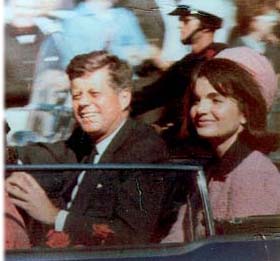
Unfortunately, there is little new to be learned from this book which is often mind-numbingly boring. Much of it reads like a pro-Kennedy, pro-Secret Service puff piece: The Kennedys were really swell folks, the agents worked really hard and were really underpaid, etc. It is filled with bureaucratic minutiae mixed with whining. Oh, and the Warren Commission was right about everything.
Blaine even got the automobiles wrong. The 1960s era Lincolns used by the Kennedys were not Lincoln Town Cars - a phrase he uses repeatedly. Clint Hill's earlier book didn't contain any never-before-revealed revelations but was a better read.
Verdict: Move along. Nothing to see here. (posted 10/18/13, permalink)
'Breakthrough: Our Guerilla War to Expose Fraud and Save Democracy' by James O'Keefe
Mr. O'Keefe is best known as the man who brought down ACORN with his undercover videos. Similar video stings have exposed the malfeasance of Planned Parenthood, NPR and other liberal sacred cows.
This book is a combination memoir, manifesto and activist guide book and recounts O’Keefe's four years as a citizen journalist. It was engrossing to begin with but slowly deflated as chapters wore on. Once you've established a technique, applying it in other situations makes for a less interesting tale.
I liked his mentor Andrew Breitbart's book better. (posted 10/14/13, permalink)
'This Town: Two Parties and a Funeral-Plus, Plenty of Valet Parking! - in America's Gilded Capital' by Mark Leibovich
This page-turner grabs one's attention from the get-go. It begins thusly: "Tim Russert is dead. But the room was alive. You can't work it too hard at a memorial service, naturally. It's the kind of thing people notice. But the big-ticket Washington departure rite can be such a great networking opportunity." Hillary Clinton is there, "keeping her smile affixed like hardened gum and sending out powerful 'stay away from this vehicle' vibes."
Leibovich, chief national correspondent for The New York Times Magazine, presents a gossipy, snarky and funny book about the political, media and mega-consultant cesspool known as Washington, D.C.
I learned that the White House Correspondents' Association Dinner is nicknamed the Nerd Prom. It is held at the hotel where Reagan was shot which insiders refer to it as the Hinckley Hilton. Another tidbit of knowledge was that "in 1974, just 3% of retiring (congressional) members became lobbyists. Now 50% of senators and 42% of congressmen do."
Hooded-eyed Bob Rubin, former Clinton Secretary of the Treasury - later, a big-shot exec and advisor at Citibank leading up to and during its sub-prime collapse, was described thusly: "Rubin's leathery brown skin and stunned eyes make him look like the kind of really old lizard that you can only see on those eco-tourism tours of Costa Rica - the kind of hyper-expensive expeditions loved by Ritz-Carlton Democrats."
While the author has a leftward political lean about him, the one individual who escaped a steaming pile of scorn is the conservative Senator Tom Coburn. He's portrayed as the plain-speaking Real Deal in a Beltway of Phonies.
Leibovich quoted the late Richard Ben Cramer, who in 1992 said that journalism had been "overtaken by a bunch of dickheads." But what about before 1992? What about ancient, vinyl-toupeed Sam Donaldson? I believe that the Merriam Webster dictionary shows his photo under the definition of 'dickhead journalist'.
I enjoyed this book. It was an eye-opener. Recommended. (posted 10/10/13, permalink)
'Those Angry Days: Roosevelt, Lindbergh, and America's Fight Over World War II, 1939-1941' by Lynne Olson
This work is a detailed, definitive account of the debate over American intervention in World War II. Over 550 pages in length, it chronicles the bitter clash of people and ideologies that divided the nation and ultimately determined the outcome of the war. Two of the most famous men in America, Franklin D. Roosevelt and Charles Lindbergh, were on opposite sides of the issue.
The book spans the period from 1939 to '41 and covers the oft-rancorous squabbles that resonated throughout Washington, DC and the rest of the country as isolationists pitted themselves against interventionists. Olson has covered the tale in great detail which may intimidate casual readers. But those who yearn for a complete and unbiased perspective will appreciate her efforts.
Some things never change - the Congress of pre-war America was as partisan and duplicitous as the current bunch and the lies and maneuvers of special interest groups to manipulate public opinion seems all too familiar.
I was surprised to learn how much FDR dithered and dodged the issue of whether America should enter the war until Pearl Harbor forced his hand. I learned a lot about the degree of anti-Semitism and racism during the period and found 'Those Angry Days' compelling and instructive. Recommended. (posted 10/4/13, permalink)
 'Circle of Friends: The Massive Federal Crackdown on Insider Trading - and Why the Markets Always Work Against the Little Guy' by Charles Gasparino
As senior correspondent for the Fox Business Network and the Fox News Channel, Charles Gasparino is a familiar name and face to many. He reports knowledgeably on major developments in the world of finance and politics and is a former writer for the Wall Street Journal.
The author relates the story of government investigators and prosecutors as they pursue one of the most aggressive and broad-reaching - perhaps overreaching ... at great expense to taxpayers - series of insider-trading cases in the nation's history. Caught in the net were some of the biggest names on Wall Street, including Raj Rajaratnam, founder of the Galleon Group, Rajat Gupta, a former CEO of consulting giant McKinsey & Co and financial impresario Steve Cohen of SAC Capital a giant hedge fund.
Near the end of the book, Gasparino wrote that "the country remains somewhat unimpressed that the government went wild on insider trading while the banking fat cats - who took such outrageous risks that they brought the global financial system to its knees - continue to walk around free."
Amen to that. And, in addition to the bankers, let's not forget Fannie Mae and Freddie Mac and its facilitators. Personally, I wished that Barney Frank, Chris Dodd, Franklin Raines and Jamie Gorelick publicly handcuffed, frogmarched out to a waiting airplane and carted off to Gitmo for some serious interrogation. Then brought to public trials and sentenced to serious jail time.
Insider trading may be a crime but its effect on the retail investor was far less than the shenanigans of so many too-big-to-fail banks where greed, irresponsibility and corruption became part of their mission statements.
This a well-written book with a well-told story. Recommended. (posted 9/30/13, permalink)
'My First Car: Recollections of First Cars from Jay Leno, Tony Stewart, Carroll Shelby, Dan Ackroyd, Tom Wolfe and Many More!' by Matt Stone
Pretty hype-filled title, ain't it? This is a book full of stories about well-known people and their first car. Celebrities, auto industry execs, race car folks, musicians and others tell tales about their first car.
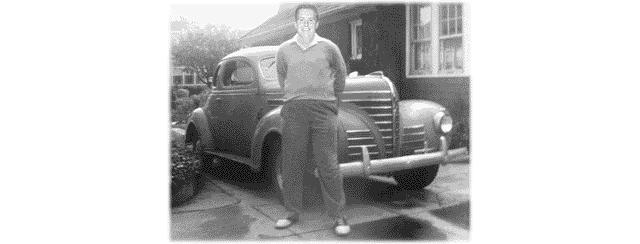
This should have been a great read, especially for a car guy like me. Some of the narratives were interesting and or compelling, especially ones from Jay Leno, Mario Andretti, Mike Love, Peter Egan and Joe Mantegna. Sadly, I found too many of the stories boring, lacking in details and devoid of properly fleshed-out story-telling. Editing left something to be desired - surprising since Stone was Executive Editor at Motor Trend magazine.
Verdict: Skip this one. (posted 9/24/13, permalink)
'Dropped Names' by Frank Langella
Frank Langella is a versatile actor of stage and film. He won a Tony Award for his performance as Richard Nixon in the play Frost/Nixon and was later nominated for an Academy Award for the same role in the film. He played the devious White House Chief of Staff Bob Alexander in the 1993 movie, 'Dave'.
Reading this book is a bit like sitting at a bar, listening to a raconteur tell insider, gossipy stories of movie and theater people over drinks. Frank is a very good story teller and the book is fast-paced easy to read. There are over 60 mini-profiles of the famous and influential.
A New York Times review noted, "The actor Frank Langella went everywhere, met everyone and fell into bed with almost everybody."
I enjoyed reading about Frank dancing with a confused but endearing Rita Hayworth by candlelight as well as his encounters with Jackie Kennedy. His portrait of Lee Strasberg as a cruel, insufferable and greatly-overrated acting teacher rang true as did his tale of an arrogant Anthony Quinn and a drunk Oliver Reed.
'Dropped Names' is not so much an autobiography but rather a remembrance of well-known people Langella has encountered.
Verdict: Recommended. (posted 9/18/13, permalink)
'Red Sparrow: A Novel' by Jason Matthews
I read a lot of novels but rarely write reviews. This gripping spy story is exceptional and deserves a mention.
It's the first novel from this veteran CIA officer and is contemporary, believable, engaging and reeks of insider knowledge and experience. The story pits Russian intelligence against the CIA and moves from Russia to Finland to the U.S., Italy and Greece.
I highly recommend this fast-paced, can't-put-it-down novel. (posted 9/5/13, permalink)
'My Way: An Autobiography' by Paul Anka with David Dalton
 Paul Anka burst on the music scene in 1957 with 'Diana'. Anka wrote and performed the song and it became a number one hit record. Other hits followed in 1958 and '59. He toured with the major stars of his era, including Chuck Berry, Jerry Lee Lewis, and Buddy Holly. Anka wrote Holly's last hit, the ironic 'I Guess It Doesn't Matter Anymore', and just missed joining the Buddy on his fatal plane flight. I don't know if that's true but it seems to me that every '50s-era singer - except Elvis, who was in the Army and stationed in Germany at the time - has claimed to be "almost on that airplane."
Anka later made a few movies, dated Annette Funicello, wrote the theme for the 'Tonight Show', became a Las Vegas fixture and a junior member of Frank Sinatra's Rat Pack. He is one of the few people from the fifties rock era who is still alive and making a good living. You have to admire this 72 year-old's talent, tenacity and ability to adapt to the times.
His autobiography is mostly an interesting read and I learned much from it - about Frank Sinatra, Sammy Davis Jr., Dean Martin, the 'business' of Vegas and the mob influence as well as many of the movers and shakers in the gaming and entertainment business. His story about Dodi Fayed and what a scumbag druggie he was certainly enlightened me.
I was shocked reading that, in the late 1980s or early '90s, Anka told casino owner Steve Wynn that he needed a minimum $5 million a year income to support his lifestyle. (Celebrities - they're different than you and me.) Of course, Paul A. is a big art collector, high stakes gambler and has two ex-wives to support, so his monthly bills are higher than yours. Or mine. Then there's all those tuxedo dry-cleaning bills.
Unfortunately, Anka's book is plagued many flaws. It is poorly-written, disjointed and repetitive. There is a ton of excessive name-dropping and it seems that all of his living acquaintances are great friends with wonderful families with whom he's spent many joyful vacations, while he really dishes dirt on former associates and celebs who are now dead and defenseless.
The autobiography's shortcomings are surprising considering that Mr. Anka engaged a professional co-writer and that the book was published by St. Martin's Press - a major publisher with access to the best in editors. Based on content, this book should have been 260 pages long not 360.
Despite the book's failings, it makes for an informative and revealing read. Recommended with reservations. (posted 8/28/13, permalink)
'The New Digital Age: Reshaping the Future of People, Nations and Business' by Eric Schmidt and Jared Cohen
The book description states that "two leading global thinkers in technology and foreign affairs give us their widely anticipated, transformational vision of the future: a world where everyone is connected - a world full of challenges and benefits that are ours to meet and to harness."
Well, the authors certainly have impressive resumes - Schmidt is executive chairman of Google, Cohen is director of Google Ideas; therefore, I expected a stunner of a book. Sadly, it's a just a collection of bits and pieces that most people already know.
What will life be like in, say, 2033 due to ever-expanding technologies? You won't find answers in this book. Just a bunch of blather about cloud computing and cell phone apps for the Third World. There's little about how businesses will evolve either, despite the promise of the book's title.
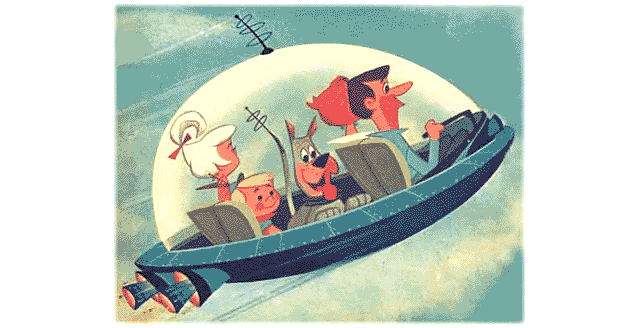
These faux-futurists won't even tell me when I can expect my flying car. The book is full of state-the-obvious. Anyone expecting a 50-years-later version of Arthur C. Clarke's 'Profiles of the Future' will be sorely disappointed.
Summary: Yadda, yadda, yadda - nothing worthwhile here. (posted 8/23/13, permalink)
'The Girls Of Atomic City: The Untold Story of the Women Who Helped Win World War II' by Denise Kiernan
Once a sleepy corner of Tennessee, Oak Ridge became a hotbed of secrecy and activity during World War II as 75,000 newcomers, mostly women swarmed into the are in order to work on what became purified uranium used in the atom bomb.
This is a subject with great promise. The author had access to several of the ladies who worked at Oak Ridge and could have done a magnificent job of telling their stories, producing an engaging narrative in the manner of 'Final Victory', 'A Man And His Ship', 'Atlantic Fever', 'Freedom's Forge' or 'Unbroken'.
Unfortunately, the resultant book is random slices of history and eyewitness accounts of a place and era - little vignettes which the author has failed to bring together with the literary connective tissue of context and organization. The book does not flow well and the reader is often left confused and in the dark as information is presented without a big picture perspective. We learn that Yankees talked funny, mud was everywhere, there were no sidewalks and life was tough. We should have learned so much more.
This could have been a great book. Sadly, it missed the mark due to poor writing and a lack of cohesiveness.
Verdict: Frustrating. (posted 8/16/13, permalink)
'Top Of The Morning: Inside The Cutthroat World Of Morning TV' by Brian Stelter
New York Times reporter Brian Stelter reveals all the dirt behind the glossy facade of morning television. BFD. I've seen just as much back stabbing, politics and clumsy firings during my years in corporate America. The difference was that the players weren't household names and didn't have agents or PR people.
Waiting to leave for grade school on weekday mornings, I'd try to catch a segment or two of the 'Today' show. Dave Garroway was a car guy and he often had segments on vehicles. He was also a proud owner of a white 1953 Corvette.
I remember seeing the televised debut of the 1953 Pontiac Parisienne Motorama concept car on 'Today' one chilly January morning. In later years, I paid little attention to morning television shows.
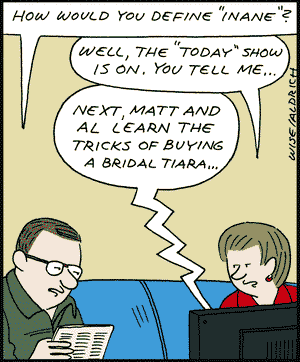
When I was on business trips, I'd often turn on 'Today' in order to catch up on national news and local weather before I left the hotel. These days, I can do that on a laptop.
 I do know that these morning network shows have been retooled as often as the 'Krusty the Clown Show' on 'The Simpsons' .... sadly, with similar results.
Poor ol' Dave Garroway is long dead and morning television has one foot in the grave. On an average morning, the top three shows combined attract less than 5% of the population. And more and more television-centric oldsters watch 'Fox and Friends', a cable show which gets little mention in the book.
Full of repetition, 'Top of the Morning' could have been downsized by half and still gotten its story across. Much of the book is dedicated to the drama surrounding NBC's ouster of Ann Curry from the 'Today' show.
The book noted that host Charlie Rose arises early and checks his news on the internet to get up to speed before starting his anchor duties at 'CBS This Morning'. That kinda says it all about the irrelevance of television news these days.
I don't find the subject of morning television very interesting. But, if you do, maybe you'll enjoy this gossipy, behind-the-scenes hardback. (posted 8/8/13, permalink)
'I Hate Everyone ... Starting With Me' by Joan Rivers
I don't care if Joan Rivers is profane, tasteless and vulgar; she makes me laugh. My friend Steve P. and I are the only two straight men in America who openly admit to watching 'Fashion Police'. And it's all because of Ms. Rivers. We are indeed Joan Rangers.
That said, how could I not like this book? A selection of the gems within:
• Joan hates people who decorate their wheelchairs with flags and stickers: "You're a paraplegic - not a mummer."
• Remember Isadora Duncan the famous dancer who died in 1927, when her long flowing scarf got caught in the rear wheel of the Amilcar roadster in which she was riding? Joan wrote, "Isadora went for a ride in the car but couldn't decide if she should wear a scarf or a choker? Turns out she wore both."
• She wonders why so many old people buy so many things in bulk. "The only thing old people should use in large amounts is formaldehyde." And: "I hate faking orgasm with an old man. You work and you work and then the whole thing's a total waste of time because you forget to moan in his good ear."
• Regarding the death of Australian crocodile hunter Steve Irwin, Joan advises people to stick to bargain-hunting instead: "No one was ever killed by a Louis Vuitton knockoff."
• Joan doesn't like shopping for caskets. "A simple pine box screams 'Cheapo'. And one of those huge, brightly-colored metal things looks like a float in a Puerto Rican Day parade."
And: "I've always wanted to design a coffin for a stripper. Why should anyone have to worry about whether Bubbles should have an open or closed casket? I'd design one that has a little window that goes up when the mourner puts in a quarter."
• Like me, Joan hates those armies of self-centered mommies walking together pushing big, SUV-inspired strollers. Joan was faced with a group "marching eight across like a German panzer division ... I said to one of them, politely, 'Hey, you're taking up the entire sidewalk, bitch.' Scowled and yelled, 'I have children!' I yelled back, ''Well, next time give your husband a blow job and you won't! Why should I have to walk into oncoming traffic because you won't give a little head?'"
• On 'family seating' at restaurants: "Even the Donner Party knew better than to do family seating: they got to the pass, they split up the corpses and then went and ate separately. ... And no one had to hear strangers' kids complaining, 'Knees, again?'"
• Hating uncooked food: "Tuna tartare is a can of cat food with pepper. And sushi is just a guppy with rice."
• On travel: "In 1957, Jack Kerouac published the classic novel, 'On The Road'. Twelve years later, at age 47, he was dead. Moral of the story: Stay home."
• She hates nudists "because the people most likely to waltz around naked are the last people in the world who should ever be walking around naked. ... You don't see men who look like George Clooney flashing around their bits on a nude beach; you see men who look like Rosemary Clooney."
• On names of countries: "I don't know if the Ivory Coast has any actual ivory in it but I respect it because it's the only country named after two deodorant soaps."
• Liz Taylor was married so many times, she "spent most of her fortune on monogramming."
• To those counter workers who use microphones at fast food restaurants: "You're not introducing U2 at Wembley Stadium at a benefit for the hungry kids in Africa; you're in a Wendy's ordering onion rings for a fat caregiver named T'anisha."
If you love Joan, you should buy this book. If you hate Joan, you should buy it anyway to help keep the feisty old broad afloat. (posted 7/30/13, permalink)
'Grand Central: How a Train Station Transformed America' by Sam Roberts
I enjoyed this book from the time I began reading long-time New York journalist Pete Hamill's foreword to the very end. OK, it did bog down a little during the preservationist section, probably because that is of minimal interest to me. Otherwise, it was a swell read.
'Grand Central' is a rich, illustrated - and entertaining - history of the iconic Grand Central Terminal in New York City, written just in time to celebrate the train station's 100th anniversary. It is a small but surprisingly heavy book due to the use of thick glossy pages. Appropriate photographs are placed on the same page as the story - a nice feature. I only wish the book was bigger and the photos larger.
You don't have to a New York Central train buff or a fan of New York City to enjoy this book. Featuring quirky anecdotes and behind-the-scenes information, readers peek into the secret and unseen areas of Grand Central - the tunnels, command center and the hidden passageways. And why there's a little square hole in the ceiling. And that semi-secret apartment with a fireplace.
There are stories about the famous movies that have used Grand Central as a location. From the book, you'll learn that a private street on the terminal's eastern flank is named after Chauncey Depew, legendary chairman of the New York Central Railroad. Depew once said, "I get my exercise acting as a pallbearer for my friends who exercise." He once defined a pessimist as a man who thinks all women are bad. An optimist, he said, "is one who hopes they are."
You'll learn that, a week after Pearl Harbor, Treasury Secretary Henry Morganthou, Jr. inaugurated a drive to raise $10 billion in war bonds.
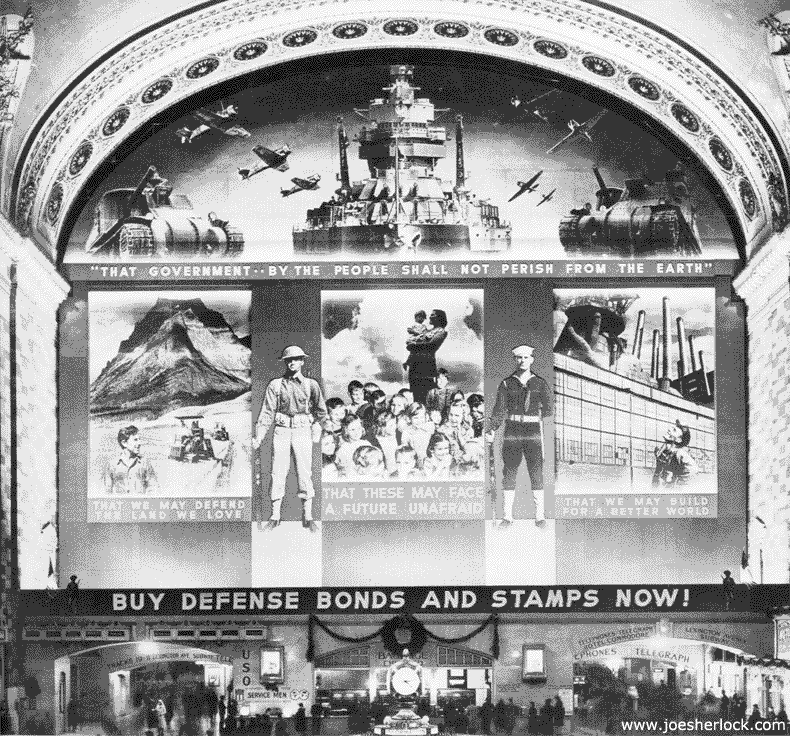
A 118 by 100 foot photomontage depicting 'What America Has To Defend And How It Will Defend it' was installed in the station on the east wall. More than 3,000 people attended its unveiling. One wonders if America could have decisively won more recent wars had it committed to raising the level of patriotic pride the way it was done in World War II.
I found this to be a well-researched, easy-to-read paean to an iconic building. Because my dad worked for the competing Pennsylvania Railroad, we always arrived in New York at the equally impressive Beaux-Arts Pennsylvania Station. That station was torn down in 1963. I have yet to set foot in Grand Central. I hope to visit this wonderfully-restored station someday. (posted 7/24/13, permalink)
'How to Make A Million Dollars An Hour: Why Hedge Funds Get Away with Siphoning Off America's Wealth' by Les Leopold
The premise of this book is that hedge funds make money by taking it from "the rest of us." I'm glad that I'm not a paid reviewer because I'd have to waste more time trying to come up with 800 words about this simplistic and superficial piece of tripe written by an obvious socialist with a chip on his shoulder.
I'm no lover of hedge funds but Leopold's book is a bitter, slanted rant rather than a work that informs and educates.
Plot summary: Money is evil; life isn't fair; some people make too much money; the little guy always gets screwed.
Verdict: Don't waste your time on this hardcover crapfest. (posted 7/18/13, permalink)
'The Big Roads: The Untold Story of the Engineers, Visionaries, and Trailblazers Who Created the American Superhighways' by Earl Swift
In the beginning, there were no roads in the U.S. - only dirt trails which later became tracks. These tracks were sometimes suitable for horse-drawn carriages and buckboards as long as the weather was dry. Rain turned these 'roads' into impassable muddy bogs. Early experiments with gravel and macadam helped things but, once 20 mph automobiles and trucks came along, these light-duty roads were quickly destroyed.
A State Department report, circa 1916, judged road conditions in the U.S. to be "far worse than any other major nation except Russia and China."
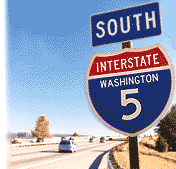 'The Big Roads' tells the story of how these primitive paths evolved into the interstate highways of today.
As someone who grew up watching the interstates grow and connect, I found the book interesting and enlightening. That said, it was also slow and boring at times, with too many unnecessary details about the politics of road-building and the middling bureaucracies which hindered progress. Too much page space was devoted to the opponents of the interstate system, especially the not-in-my-neighborhood crowd.
The stories of the demise of towns and businesses bypassed by major highways - the big roads they had fought against - were repetitions of the same old whining variety one hears about progress of any kind and were not worthy of inclusion. Ditto about the sameness of chain motels and proliferation of McDonald's at Interstate exits.
Nothing changed the face of America more than the creation of the Interstate system. And it was, for the most part, a very positive and much-needed development. I've written more about Interstates here.
We take our roads for granted. Reading this book may help road users better appreciate the asphalt on which they drive every day. For that reason, it's definitely worth the read. (posted 7/10/13, permalink)
'To Sell Is Human: The Surprising Truth About Moving Others' by Daniel H. Pink
In the U.S., one in nine Americans works in sales. That's why there are so many books about how to improve one's selling skills. Some are great; some are not. Sadly, Daniel Pink's offering is in the latter category.
That's not to say that there aren't a few good ideas in the book. But you have to dig through a lot of sludge to unearth the sales gems.
Pink would have you believe that everyone in an organization is a salesperson. And that anyone can sell. My experience is that neither is true.
During my years as a business consultant, I encountered many companies experiencing low sales volumes. My first question would be, "Who is responsible for sales?" The two worst and most telling answers were "Everybody" and "Nobody." When everyone is responsible for sales, there's no accountability. The result is a half-hearted and ineffective sales effort by some and a 'somebody else will take care of it' attitude from the rest. When no one is responsible for sales, revenues stagnate and decline, as competitors move in and take over.
As to the naive 'anyone can sell' thesis, everyone who has ever employed sales people knows this to be untrue.
Pink often confuses sales with persuasion. He bashes 1970s car supersalesman Joe Girard, as a pushy, behind-the-times dinosaur and an example of everything that's wrong with sales people. Pink seems to think that the sales switch has only two settings 'pushy' and 'persuasion'. Actually, I found Girard's 1977 book, 'How To Sell Anything To Anybody', quite helpful and believe that parts of it are still relevant today, especially tips for making prospective customers feel important and finding out what prospects really want. That's not pushy; it's smart selling.
Authors Girard and Pink travel well-worn paths. 'The Art of Persuasion' was written by Blaise Pascal, a French mathematician, physicist, inventor, writer and Christian philosopher, in the 17th Century. Conwell's famous 'Acres of Diamonds' book was published in 1890. Dale Carnegie wrote 'How to Win Friends and Influence People' in 1936. And, Carnegie's self-help course has been around for over a century. Zig Ziglar's 'See You at the Top' was first published in 1975. All of these publications have been praised by salespeople.
In contrast, Pink's effort seems shallow and is full of pop-culture whiz-bang. He enjoys making fun of traditional sales methods, which have worked for centuries and continue to convert prospects into buyers. Ironically, his 'ask questions', 'listen-to-the customer', 'exceed expectations' mantras have been the modus operandi of exceptional salespeople for ages.
Summary: There are much better and more helpful books on this subject. (posted 7/2/13, permalink)
'Ike and Dick: Portrait of a Strange Political Marriage' by Jeffrey Frank
They certainly were the odd couple. Ike, smiling, friendly, grandfatherly type on the outside with the credentials of a genuine hero. But, while quite familiar with handling military politics, Eisenhower was somewhat ignorant of the way things are done in Washington, D.C.
Nixon, felt, looked and acted like an underdog. Earnest and ambitious, he made a name for himself relentlessly and skillfully exposing of Communists in government, especially the State Department.
Paired up as running mates in the 1952 election, Eisenhower didn't select Nixon and when a minor fund scandal threatened the new VP candidate, Ike left him to twist in the wind. Nixon had to save himself with the famous Checkers Speech.
Ike wanted to be semi-retired president, so he had time to play golf, fish and hobnob with his old buddies, including white Freeman Godsen, who did the voice of black Amos on the 'Amos 'n' Andy' radio show. Nixon was excluded from most of these events. These and other Eisenhower slights including demeaning jibes, made Nixon insecure and ever-afraid that someone was out to get him.
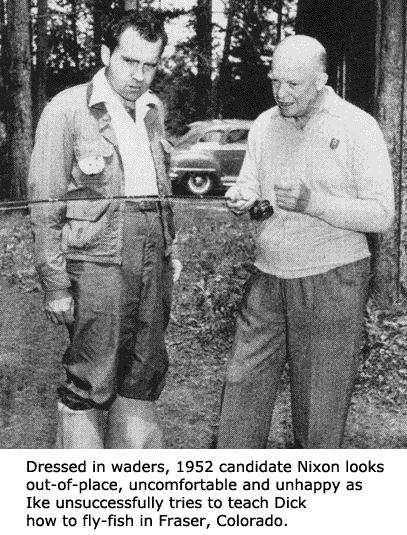
Eisenhower was not the kindly man the public perceived. He was easily angered, oft red-faced and could be vindictive. He had become a spoiled man, used to having everything done for him during his years as a high-ranking military commander. He didn't know how to use a dial telephone. He always had flunkies to place calls for him. In later years, the ex-president had his Secret Service agents help him use the phone.
Eisenhower's health posed a severe test for Nixon three times during Ike's eight year tenure. The president could have died at almost any time during these crises and Nixon seemed to rise to the occasion better and better as time progressed. Nixon did the around-the-world stuff on Ike's behalf, almost getting killed in Venezuela. Ike often used him as the Republican attack dog against opponents; Ike preferred to stay above the fray. Nixon also did remarkably well against Khrushchev at the famous Kitchen Debate in Moscow. Despite Nixon's obvious vice presidential accomplishments, he never was given his due by Eisenhower. In the midst of Nixon's 1960 presidential campaign, Ike was asked by a reporter whether Nixon had ever presented a major idea that was adopted by the administration. Eisenhower replied, "If you give me a week, I might think of one."
Eventually, Nixon got the upper hand - becoming a strong successful 1968 presidential candidate as Eisenhower descended into an ill old man, whose opinions were no longer important to those in power. Loyal to the end, Nixon remained respectful and somewhat obsequious until Ike's death in March 1969.
Former Washington Post reporter Jeffrey Frank has done an excellent job of sketching the complex relationship between two presidents. Recommended. (posted 6/26/13, permalink)
'Big Data: A Revolution That Will Transform How We Live, Work, and Think' by Viktor Mayer-Schonberger and Kenneth Cukier
The engineer part of me has always searched for data. Early in my career, I used to say to my fellow engineers, "Theorize all you want but it's all bullshit until you have empirical results." There were occasions when I ran tests, collected data and blew people's pet theories, rules of thumb and gut feelings out the window. Unfortunately, some of these erroneous assumptions had been authored by my superiors who were not pleased.
Data is used to spot trends so you can do something about them - take commercial advantage of a growing market, buy airline tickets at the best price, predict traffic jams and reroute vehicles. This is only possible because of the lower cost of computing power. The authors point out that, in 1986, "around 40% of the world's general-purpose computing power took the form of pocket calculators, which represented more processing power than personal computers at the time."
Technology has made the collection of data cheap and easy. This book shows the dramatic impact it will have on the economy, science, and society at large. 'Big Data' refers to our ever-expanding ability to process vast collections of information, analyze it almost instantly, and draw conclusions - often surprising ones - from it.
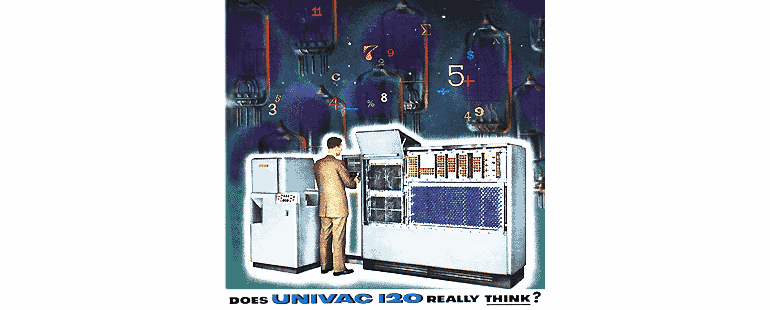
'Big Data' begins with the story of Google devising a means to track the spread and intensity of flu prior to the 2009 season. Google's methodology began by comparing the 50 million most common American search terms with Center for Disease Control data on the spread of seasonal flu for the previous five years - a huge amount of information. Google's software found a combination of search terms that strongly correlated with official flu stats from the period. Unlike the CDC, Google was able to make those assessments in real time, rather than weeks later.
The book discussed the down side of Big Data as well, pointing out the loss of privacy. The authors noted the irony of 30 surveillance cameras placed "within 200 yards of the London apartment where George Orwell wrote '1984'." Data can be misused as well, including the demand for 'body count' information in the 1960s by Robert McNamara, the man who brought us the Ford Falcon and the disastrous turn in the Vietnam War. While at Ford, McNamara demanded data points for every industrial situation and once issued an "edict that all inventory from one car model must be used before a new model could begin production." Exasperated production line managers simply dumped excess parts into a nearby river.
While 'Big Data' does not drill down into the details of this fast-changing technology, it presents a fascinating overview of how the plethora of information gathering and analysis change the way we think about business, health, politics and life in the years to come. Recommended. (posted 6/20/13, permalink)
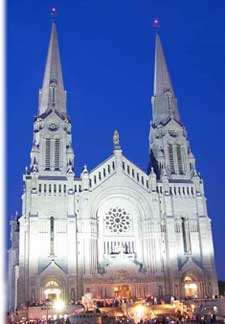 'Persecuted: The Global Assault on Christians' by Paul Marshall, Lela Gilbert and Nina Shea
This is not a pleasant book. It contains documented accounts of the persecution - harassment, abuse, torture and murder - of Christians in Africa, Asia, the Middle East, and former Soviet nations. A woman caught with a Bible is publicly shot to death. Priests, ministers and lay religious are abducted and never seen again. Three buses full of students and teachers are struck by roadside bombs. These stories of persecution and martyrdom will break your heart and make the book a difficult read at times.
The two major sources of anti-Christian persecution in the world are Islam and Communism. Christians are the world's most widely persecuted religious group, according to studies by the Pew Research Center, Newsweek, and the Economist.
Recently, Vatican spokesman Monsieur Silvano Maria Tomassi said, "Credible research has reached the shocking conclusion that an estimate of more than 100,000 Christians are violently killed because of some relation to their faith every year."
The U.S. government keeps telling us about our "friends," Turkey and Saudi Arabia, but these friends have decidedly anti-Christian attitudes. Saudi Arabia with its radical state religion, Wahabism, is one of the worst offenders. It's where al Qaeda movement began.
It is worth remembering that al Qaeda has a deliberate, stated policy of targeting Christians with terror ... at least, when they're not busy trying to eradicate Israel and all Jews. Osama bin Laden repeatedly told his acolytes that the war against non-Muslims a holy war which "will continue until Judgement Day."
In many ways, Turkey is an even sadder story. Once a seat of Christendom - St. Paul addressed early Christians in Ephesus - Constantinople fell to invading Muslim armies and became Istanbul. Five centuries of Ottoman Muslim rule followed. After the collapse of the Ottoman Empire, the rule of Young Turks decimated the Christian and Jewish population of Turkey by genocide, massacres and ruthlessly executed population 'exchanges'. In 1923, Mustafa Ataturk continued the repression of non-Muslims. Things have changed little since then.
Connecting the dots in this book, it becomes obvious that Islamists are in a war to eliminate all non-Muslims. And, right now we're losing. Perhaps it's time for the remaining Christian and Jewish nations to band together and start a Second Crusade.
Verdict: heavy and painful reading but recommended nonetheless. (posted 6/12/13, permalink)
'The Inventor and the Tycoon: A Gilded Age Murder and the Birth of Moving Pictures' by Edward Ball
This is the story of two men: photographer, inventor and murderer Eadweard Muybridge and the wealthy railroad tycoon Leland Stanford, who bankrolled Muybridge.
There is enough of a story here to make an engaging magazine article. Unfortunately, the author decided to produce a 465-page plodding, rambling and unfocused book. This work is padded with unnecessary supposition and trivia. The narrative jumps all over the place; I found that highly annoying. And it's repetitive.
This is admittedly an incomplete report because I couldn't bring myself to finish the book. I have better things to do.
Verdict: Waste-O-Time. (posted 6/6/13, permalink)
'The Esperanza Fire: Arson, Murder, and the Agony of Engine 57' by John N. Maclean
I know almost nothing about firefighting, so I found this book interesting informative and educational.
The Esperanza Fire of 2006, located near Cabazon, California, killed a five-man Forest Service crew sent to fight the blaze. This huge fire was started by an arsonist and the book covers not only the fire fighting efforts, but the investigative work and, eventually, the trial and verdict which resulted in the death penalty for Raymond Oyler.
The book is filled with details but seldom bogs down. Recommended. (posted 5/31/13, permalink)
'The Great American Railroad War: How Ambrose Bierce and Frank Norris Took On the Notorious Central Pacific Railroad' by Dennis Drabelle
Don't judge a book by its cover, we are told. But this book, about the 19th Century battle in the West between the Central Pacific, Southern Pacific and Union Pacific Railroads, carries a photo of a 20th Century Pennsylvania RR steam locomotive on the cover. A bad omen and not a good start for a book.
So, what does a 19th Century loco look like? Here's one from 1866:
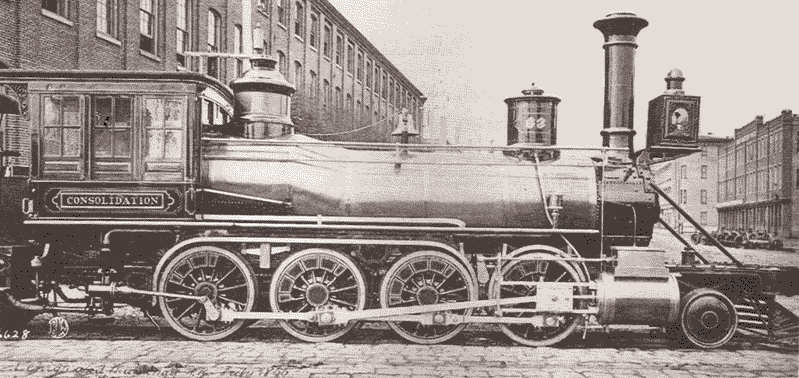
'Railroad War' relates the story of two authors, Ambrose Bierce - a nasty piece of work himself - and Frank Norris, who took on the Central Railroad monopoly and exposed its misdeeds in print.
Unfortunately, the book falls well below the standards of popular history. And it's boring.
Verdict: don't bother. (posted 5/23/13, permalink)
'The Age Of Edison: Electric Light and the Invention of Modern America' by Ernest Freeberg
The little egotist in all of us believes that before we were born there was nothing. We watched the rise of computers, followed by the internet, followed by the web and decided that it was The Most World-Changing Event Ever. Have no fear, little ego, Ernest Freeburg's book will set you straight.
 The electric light profoundly changed everything, providing cultural and societal changes in the late 19th and early 20 Century that may equal or even dwarf those shifts brought about by the internet revolution. The book is a historical overview which focuses more on the social impact of electric light rather than technical details. It's full of stories about popular culture of the time and the changes, both large and small, caused by the lighting of America, mostly during the 1880-1920 period.
The era's foibles are captured too: there were many sociologists who fought against the proliferation of electric lamps in the belief that such light was "unnatural" and that it endangered the family togetherness fostered by gathering around a single oil lamp at night. Some physicians said the new invention caused "ocular exhaustion, discomfort and congestion." Other foes included the gas lobby, correctly perceiving electricity as a threat. The Vatican temporarily banned the use of electric light in Catholic churches in 1889, finding it "both dangerous and theologically suspect."
Supporters included numerous doctors, some claiming that they had successfully used electric light to treat syphilis, pneumonia, lead poisoning, diabetes, rheumatism and "morbid conditions of the blood." Police were enthusiastic about lighting up the night as a way to prevent crime.
Thomas Edison was not the first or the only person to develop the incandescent light bulb. But he was the first to understand the context of the invention and successfully exploited its commercial possibilities. Electric light began as a rich man's toy - early bulbs required skilled labor and cost $1 each in 1881; 30 years later mass production had brought the price down to 17 cents. Edison made his share of mistakes; he was on the wrong side of the DC vs. AC argument and failed to realize that AC current's greatest advantage was low line losses, even over long distances.
When asked why America produced so many electrical inventors compared with Great Britain, Edison suggested that the English "did not eat enough pies."
The Japanese quickly embraced electric lighting and one 19th Century American news editor warned readers prophetically, "The Japanese can make anything we can. They can produce what we need at less cost than we can make it ourselves and, unless a high protective tariff is raised against Asia, that country will become the factory for America."
The era produced many electric shows and exhibits throughout the civilized world. In 1884, Philadelphia's Franklin Institute held its International Electrical Exhibition. It dazzled adults and children alike. Some exhibits were damaged because of the enthusiasm of kids. Still, by 1910, less than 15% of American homes were wired for electricity. But, by 1930, the number had risen to 70%.
Overall, this was a very "illuminating" book. Recommended. (posted 5/15/13, permalink)
'The Tinkerers: The Amateurs, DIYers, and Inventors Who Make America Great' by Alec Foege
I wanted to like this book and found the first chapter enticing. But the story quickly devolved into a mixed study of quirkiness and selected stories of inventors and their inventions tossed in for good measure.
 'The Tinkerers' is devoid of how-tos and recommendations, although author Foege is dismayed that tinkering is becoming a lost art. At the end, he writes, "I deliberately have avoided filling this book with prescriptions for educational reform or remedies for reordering America's priorities and values, because I think such assessments tend to be wildly subjective and scolding." Why write the book then? If tinkering made America great, maybe it did so because of a bit of scolding, mixed with encouragement and a push in the right direction.
I'm a fan of tinkering and learning to make stuff. But Foege seems to have difficulty separating tinkering from inventing. Karl Benz may have 'invented' the first modern automobile in 1886 but it was a diverse army of tinkerers and minor inventors who produced the continuous improvements that resulted in the modern, efficient, safe and convenience-laden vehicles we drive today.
Not every improvement gets patented; minor, sometimes unseen changes - tweaks or tinkering - in design, structure or formulation often make a big difference in functionality. This issue is not discussed.
I found this to be a book without purpose. If you're interested in the subject, 'Makers: The New Industrial Revolution' is a better choice. (posted 5/3/13, permalink)
'Stalin's Secret Agents: The Subversion of Roosevelt's Government' by M. Stanton Evans and Herbert Romerstein
Joe McCarthy was right, you know. Communists infiltrated the Roosevelt administration and prolonged World War II. In 1964, when 'None Dare Call It Treason' was published, my college profs mocked me. And anyone else caught reading John Stormer's shocking book, which detailed the damaging undercurrent of Commie influence in the U.S. Despite the howls of leftists, over seven million copies were sold. The book posited that the United States had been betrayed by its elite, blaming Communists, their enablers and their sympathizers.
In 'Stalin's Secret Agents', the authors focus on the sinister events which transpired during the Roosevelt era, especially during World War II. Both are certainly well-qualified to tell this story. Romerstein is one of the nation's leading experts on the Cold War. He was on the staff of the House Intelligence Committee for many years and also was the head of the Office to Counter Soviet Disinformation at USIA. Evans is a veteran journalist and the author of 'Blacklisted By History' about the oft-vilified Senator Joseph McCarthy.
Franklin Roosevelt was a sick man in 1943 and, during the wartime conferences at Teheran and Yalta, his addled (and probably cancer-ridden) brain was likely unable to comprehend the pro-Soviet giveaways he made at the behest of his socialist, pro-Stalin advisors. By that time, there was widespread infiltration of the federal government by Stalin's "agents of influence" who caused havoc for America, Poland and pre-Communist China.
Evans and Romerstein support their assertions with substantial documentation. The book is an alarming but educational read. Recommended. (posted 4/23/13, permalink)
'Rollback: Repealing Big Government Before the Coming Fiscal Collapse' by Thomas E. Woods, Jr.
The author's interview on BookTV was interesting enough that I wanted to read his latest book. The work's premise is that government is not the answer to our problems. Rather, too much government is the problem. Woods is a senior fellow at the Ludwig Von Mises Institute, an Austrian School of economics think tank.
Unfortunately, the book simply puts forth the tired but true argument that America has set itself on an almost certain course toward bankruptcy and financial collapse.
It's not a bad book but it seemed like I've read all this before and found nothing new or provocative within the pages. (posted 4/11/13, permalink)
'The Soundtrack of My Life' by Clive Davis with Anthony DeCurtis
 Born in 1932, Clive Davis seemed to have little interest in popular music in his teens and twenties, despite the fact that many of the largest changes in music occurred during those periods: the decline of big bands, the rise of top 40 radio, the development of 45 and LP records, the birth of rock and roll and the increasing influence of television on star-making. He wrote that he didn't like the sound of '50s rock and roll.
A lawyer by training, Clive got a reputation for picking hit music and artists in the mid-1960s. The book never really explained how this talent came about - was it a head injury, a Clive-developed scoring system or an epiphany of sorts? There is no doubt that Davis was incredibly successful at talent-picking and remains so even though he is now in his 80s. He has worked with a wide array of artists: Whitney Houston, Janis Joplin, Simon and Garfunkel, Barry Manilow, Dionne Warwick, Carlos Santana, Aretha Franklin and many more, including numerous hip-hop and rap artists.
In this tome, there was little about the 'business' of the music business nor much about the effects of recent technology or the internet (iTunes, YouTube) on the business. There was - in my view - way much too much name-dropping of famous locales, hotels and restaurants. You won't find any 'how-to' advice within the pages; Clive's secret skills remain a secret.
There was almost no mention of family and personal events in the book until the last chapter, making such things seem like an afterthought.
This autobiography presented a portrait of a single-issue driven man, seemingly oblivious to events outside the music business. Sadly, 'The Soundtrack of My Life' was an unsatisfying read. I finished the book with the feeling that I wanted more of the blanks filled in. (posted 4/5/13, permalink)
'The Panther' by Nelson DeMille
I'm a big fan of DeMille's novels and especially like his wise-cracking character - New York Anti-Terrorist Task Force agent John Corey.
In this book, Corey and his wife, FBI agent Kate Mayfield, are posted to Yemen and are working with a small team to track down one of the masterminds behind the USS Cole bombing, an al Qaeda operative known as the Panther.
This is a fast-paced, oft-funny novel. Recommended. (posted 3/28/13, permalink)
'Heads In Beds: A Reckless Memoir of Hotels, Hustles, and So-Called Hospitality' by Jacob Tomsky
This quick read was sometimes humorous and contained some interesting stories. Ultimately, it disappointed. The writer's 'experience' in the hospitality industry consisted of working in low to mid-level positions at two upper-end hotels. The promised "insider tips" are few, far-between and unhelpful.
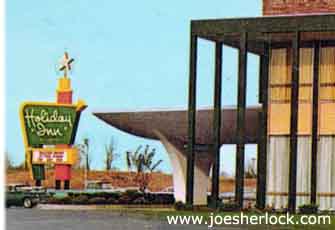
The author's whiny, self-indulgent and profane rants demonstrated that he had become an unhappy, bitter employee with substance-abuse issues. Oh, I forgot to mention his cynicism: "Service is not about being up-front and honest. Service is about minimizing negatives and creating the illusion of perfection. Here's how it's done: Lie. Smile. Finesse. Barter. Convince. Lie again. Smile again."
Verdict: Skip this one. (posted 3/18/13, permalink)
'Coolidge' by Amity Shlaes
The intro to that venerable television series, 'All In The Family' had Archie and Edith singing, "Mister, we could use a man like Herbert Hoover again." After reading this book, I have concluded that the man we could use again is Calvin Coolidge.
Amity Shlaes has produced a thoughtful, detailed reexamination of America's thirtieth president, Calvin Coolidge, and the decade of unparalleled national growth under his leadership. Shlaes traces Coolidge's improbable rise from a tiny town in New England to the White House. In the midst of government excess and corruption, Coolidge rose to restore the national trust in Washington and left office with a federal budget smaller than the one he inherited.
As Governor of Massachusetts, Coolidge gained national fame during Boston Police Strike of 1919 by firing every striking policeman, a move not unlike of the action taken by President Reagan against air traffic controllers in 1981. The strike gave momentum to Coolidge's political career.
Calvin Coolidge served for sixty-seven months, finishing out Warren Harding's term after Harding died in early August 1923 and remaining until early March 1929. Under Coolidge, the federal debt fell. Under Coolidge, the top income tax rate came down by half, to 25% and the federal budget was always in surplus. Under Coolidge, unemployment was 5% or less. During his presidency, Americans wired their homes for electricity, bought their first cars or household appliances on credit and the economy grew strongly, even as the federal government shrank.
Shlaes wrote, "Somehow, the extent of the Coolidge achievement is not known. Coolidge figures infrequently in the great national conversation about presidents; when he does win mention, it is often as a caricature of Puritanism, Silent Cal, or as a placeholder between Roosevelts. ... Perhaps the deepest reason for Coolidge's recent obscurity is that the thirtieth president spoke a different economic language from ours. He did not say 'money supply'; he said 'credit.' He did not say 'the federal government'; he said 'the national government'. He did not say 'private sector'; he said 'commerce'. He did not say 'savings'; he said 'thrift' or 'economy.' Indeed, he especially cherished the word 'economy' because it came from the Greek for 'household'. To Coolidge the national household resembled the family household, and to her displeasure he monitored the White House housekeeper with the same vigilance that he monitored the departments of the federal government. Our modern economic lexicon and the theories behind it cannot capture Coolidge's achievements."
Coolidge's friend, J.P. Morgan partner Dwight Morrow once said, "Calvin is one of the fellows who is real. He really wants to make things better not pretend to make them better." The term 'silent majority', attributed to Richard Nixon, was first used by ad exec Bruce Barton during his praise of Calvin Coolidge campaign in a 1919 Collier's article: "It sometimes seems as if this great silent majority had no spokesman. But Coolidge belongs with that crowd, he lives like them, he works like them, and understands." Perhaps that's why President Reagan had Coolidge's portrait dusted off and rehung in the White House.
Four years ago, I wrote a favorable review of the author's previous work, 'The Forgotten Man'. This latest Shlaes' offering is also a book worth reading. (posted 3/12/13, permalink)
'1775: A Good Year for Revolution' by Kevin Phillips
Contrarian and historian Kevin Phillips asserts that 1776 shouldn't have been appointed as the watershed year of the American Revolution. 1775 is a better fit, says he. Unfortunately, he never gets around to proving it.
The more one reads 1775, the more it becomes obvious that there were many outrages - big and small - over many years, that contributed to the colonists finally getting fed up enough to declare their independence. Each colony had reasons of its own but some common threads include various Acts which resulted in more taxation, attempts to restrain and tax trade between colonies, British efforts to disrupt Colonial trade with other countries and the boorish behavior of British troops and officials.
This book is certainly thorough which makes for a difficult read if your interest in history is casual rather than professorial. The author wanders a lot, looking at Indian issues, Catholic hatred, press-ganged sailors, competing revolutionary ideologies, the naval stores business and the like. After long-winded introductory chapters, much of the book concentrates on the escalation of armed conflict starting in the Spring of 1775.
Does a single year ever define history? I doubt that historians sit around debating the importance of one year against another. While this book contained many facts that were new to me, I struggled to finish this dense, unfocused, difficult-to-follow work. (posted 3/4/13, permalink)
'John Quincy Adams' by Harlow Giles Unger
Born in 1767, John Quincy Adams, the oldest son of John Adams, witnessed the Battle of Bunker Hill. Throughout his life, Adams continued not only as a witness to history but as a maker of history. At age 14, he acted as secretary and interpreter for the first American ambassador to Russia. As I read this, I reflected upon how little I had accomplished at such an age and was humbled by Adams' prowess and drive. As a teenager, he spoke six languages fluently and had read many classic books, Latin and otherwise. In my weak defense, I can only point out that they didn't have comic books - or TV - back then.
His accomplishments were many - Adams fought for George Washington, served with newly-elected House member Lincoln, negotiated an end to the War of 1812 and engineered the annexation of Florida. He served his nation as minister to six different countries and held the offices of secretary of state, senator, congressman, and president. His speech before the Supreme Court won the decision that freed the African captives of The Amistad. He was a staunch abolitionist and died in Congress while fighting for it and his other causes in 1848.
The author uses Adams' 68 years of diaries to tell the story and express Adams' contemporaneous feelings and opinions. There is much detail about the infancy of the fragile Republic, as well as its struggles to survive and find its footing amidst the turmoil across the Atlantic. The concept of a dysfunctional Congress is not a new one and the chronicled follies of the senators and representatives during Adams' lifetime are at least as woeful as the misrepresentations, pettiness, skirmishes and power-grabbing seen today.
Not always popular and a one-term president, John Quincy Adams was an learned, principled and stubborn man who eschewed politics in his quest for a better America. As a casual student of history, I found Unger's book fascinating and interesting to read. Recommended. (posted 2/26/13, permalink)
'Back To Blood' by Tom Wolfe
Let us all acknowledge that Tom Wolfe is an American Treasure. He has produced many thought-provoking, funny works. He has revived the use of exclamation points!!!!!! In past works - fiction and nonfiction - he has conducted archaeological digs at the fringes of our culture and has unearthed treasure troves of interesting artifacts, fetishes and characters.
'Back to Blood' is a novel ::::: the stream of colons is Wolfe's latest style of punctuation, sort of like a throat-clearing, brain-straightening pause ::::: the front cover tells you so!!!!! In discrete type, of course!!!!! The aging, white-suited satirist wants you to know he's still in the game. But should he be?
This 720-page snorer is long on descriptive quippy verbiage but short on plot. The reader develops neither sympathy for nor connections with the characters, who seem like poorly-sketched cartoons. One of them is full of herpes pustules!!!!!!! And, though the novel is set in the present, all the cars have fanciful, phony names. Finally, the story has neither a moral nor a satisfying conclusion.
Plod along with Tom through the neighborhoods of Miami, if you must. I predict you'll regret it. Not recommended!!!!! (posted 2/20/13, permalink)
'The Joy of Hate: How to Triumph over Whiners in the Age of Phony Outrage' by Greg Gutfeld
Greg Gutfeld is a brilliantly funny social commentator. His middle-of-the-night cult show, 'Red Eye', is fast-paced and interesting. Greg is also a regular on 'The Five', another Fox News show. Some of the mini-chapters in this easy-to-read book were former 'Gregalogues', the awesome ranting editorials delivered on 'Red Eye.' I reviewed his last book in 2011.
In this book, Greg tackles liberal tolerance - which is a bizarre form of intolerance - and the phony outrage over perceived societal slights - a favorite staple of liberal pundits. We've all met people who seem quite calm and reasonable until they find out you disagree with them. Then they become red-faced, their voices get louder and their comments turn sarcastic and spittle-flecked. Are you now picturing someone you know? Or just Keith Olbermann?
William F. Buckley once opined, "Liberals claim to want to give a hearing to other views, but then are shocked and offended when they learn that there are other views." Exactly.
Gutfeld is far funnier than Buckley and doesn't make you run frantically to your Thesaurus the way ol' Bill used to.
Take Hollywood, for instance. On television, Greg has previously discussed the sanctimonious, preachy, aging celebrity Robert Redford, claiming that he "looks like an unlubricated catcher's mitt" or "an elderly woman." Redford disdains the U.S. and had particularly venomous words for Mitt Romney, probably because Mr. Romney has aged better than Mr. Redford. In the book, Gutfeld refers to Redford as "bloomin-onion-faced." As to Redford's political thinking, which - according to the actor - evolved when he was a student in Europe, Greg wrote, "I've cracked open fortune cookies with deeper thinking than this. And anyone who thinks a guy like Redford spent his early 'European years' doing anything more than drinking wine and bending costars over the radiator, knows nothing about young men."
Greg devotes a chapter to the story of the proposed Muslim mosque and cultural center located near the Ground Zero in New York. When Muslims whined - there's a reason it's called the Whiniest Religion on Earth - about objections from an rightly offended general public and called for "tolerance" - this from the Most Intolerant Religion on Earth, Greg responded by trying to buy the property next door and open "a Muslim-friendly gay bar." Greg proposed a name for the establishment: 'Suspicious Packages'. The Muslims were not amused. They never are. But I was and, if you were too, you'll probably enjoy 'The Joy of Hate'.
This rollicking, slightly-twisted, politically-incorrect book offers a big dose of common sense. And chuckles. Highly recommended. (posted 1/28/13, permalink)
'Life Is A Gift: The Zen of Bennett' by Tony Bennett
A dozen or so years ago, my wife and I attended a most-enjoyable Tony Bennett concert. At the end, we left by a side door because we thought it would put us closer to where we had parked. As we walked down an unfamiliar alley, we found that it intersected with a blind alley. At the end - 30 feet away - was Tony Bennett, catching some fresh air. Alone - no guards, no entourage. We were speechless; the best we could muster was a little wave. Tony gave us a big friendly smile and waved back. No diva he.
This legendary, happy 86 year-old has just written a book. In simple prose, he tells of his life, relating lessons and making suggestions. It is a relaxed, breezy work that provides serious advice - about making music, living life and fulfilling dreams.
Bennett shares stories of friends and family and the fundamental philosophy taught him - dedication to excellence, perseverance in pursuit of timeless music, humility and gratitude.
'Life Is A Gift' is an easy read which provides an uplifting, inspiring message. Recommended. (posted 1/22/13, permalink)
'I'd Like to Apologize to Every Teacher I Ever Had: My Year as a Rookie Teacher at Northeast High' by Tony Danza
I know little of actor Tony Danza and his work, except for watching the sitcom 'Taxi' in the late 1970s. I selected this book, not because of Danza, but because of the captivating title.
Northeast High School is located near Cottman & Castor Avenues in the Rawnhurst Section of Northeast Philadelphia. Cottman, the nationwide chain of transmission repair shops, was named after this very same avenue where the first Cottman Transmission was located - not far from the school.
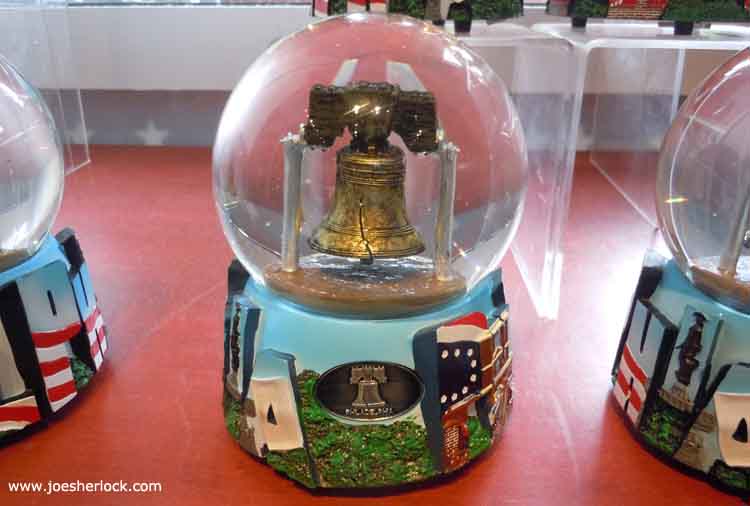
The neighborhood used to be solidly middle-class, white and heavily Jewish with a sprinkling of Baptists, Presbyterians, Lutherans and Catholics. When I was growing up, my uncle's family home was two blocks from this school. Some of my wife's friends graduated from NE. The five places where I lived during my years in Philadelphia were all within a few miles of Northeast High School.
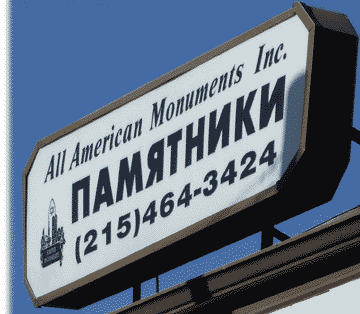 These days, Rawnhurst is a lower income neighborhood and has a significant black, Russian, Middle Eastern and Latino presence.
The book is a poignant account of Danza's year as a part-time English teacher at Northeast High. It provides a vivid insight into the daily challenges for a teacher in an urban school setting. Many of the students want to learn and succeed but are held back because of dysfunctional family life outside school. Others are smart and clever but are influenced too much by gangsta peers. Students often come from broken homes and, either because of work or disinterest, parents have little interaction with teachers and administrators regarding the promise/problems of their offspring.
Part of the problem is changing morals. In 1950, 85% of black children were born to their two married parents.
Today, 70% of black children are born to single mothers. "In some neighborhoods, two-parent families have vanished. In parts of Newark and Philadelphia, for example, it is common to find children who are not only growing up without their fathers but don't know anyone who is living with his or her biological father."
There are enough discipline problems that Northeast actually has a police station inside the school itself.
Danza has dramatically portrayed the frustration that urban educators experience in an impossible system where they are expected to be teachers, disciplinarians and substitute parents.
At the end of the book, he offers observations and recommendations based on his worm's eye view as an on-the-ground teacher. Unfortunately, the larger picture he fails to capture is a top-loaded education infrastructure, burdened with costly administrative overhead that has done nothing to improve test scores or outcomes over the last 50 years, despite massive improvements in communication and learning technology. I have written about education issues on numerous occasions.
When my wife and I visited Philadelphia in 2011, we happened to drive past NE High and were stuck in a traffic jam because it was the last day of the school year and numerous students (or probably their parents) had hired obscenely long stretch limousines (we saw at least 25 of them) to pick up their kids. What the hell kind of parenting is this? And the kids popping up through the padded top sunroofs of these limos were mostly black, perhaps the same ones who Tony agonized about because their families couldn't afford computers or school supplies. Welcome to 21st Century ghetto parenting priorities.
'I'd Like to Apologize' is an interesting and eye-opening book. Recommended. (posted 1/16/13, permalink)
'Makers: The New Industrial Revolution' by Chris Anderson
I'll start with the bottom line: I recommend this book highly. Now, let's talk about me. I'm a crotchety old retired guy who has been in manufacturing most of my life. I became successful in my plastics business by being creative - in design, manufacturing and marketing. But I was limited to tools/technologies available during the era.
In this book, Wired magazine editor, entrepreneur and bestselling author Chris Anderson has provided a tour of the front lines of a new industrial revolution being created by today's entrepreneurs. As I read along, my emotions ranged from old-man-angry: "Hey, you can't do it that way!" To amazement: "But people already are!" To wonder/envy/longing: "Gee, I wish we had these tools 30 years ago!" To wizened skepticism: "Yeah ... but the way you're doing it leads to new difficulties which you must overcome." And Anderson presents marketing/selling/promotion in a cheerfully Panglossian universe, ignorant of the power and realities of old-line but still-effective distribution systems.
In Anderson's age of custom-fabricated, do-it-yourself product design and creation, the collective potential of a million garage tinkerers and enthusiasts is about to be unleashed, driving a resurgence of American manufacturing. I hope that's true but the concept is so new that there are not yet enough success stories to provide validation. Chris posits that these new Makers, using the innovation of the web will help drive the next big wave in the global economy, as the new technologies of digital design and rapid prototyping gives everyone the power to invent and create.
It could happen. Consider how software, CAD-CAM, desktop publishing and e-commerce has already helped disrupt industry after industry. Those are things all of us have witnessed.
When I sold my manufacturing business in 1989, one of my largest display customers said to me, "Feel good about what you've accomplished - your business model changed an entire industry." I think it's happening again and again, although this time I won't be the change agent because I'm out of the game. Nevertheless, big changes are a-comin'.
Thank you, Chris, for lifting the veil of the future for a brief look at what's ahead. Astounding. (posted 1/10/13, permalink)
'The Patriarch: The Remarkable Life and Turbulent Times of Joseph P. Kennedy' by David Nasaw
Joe Kennedy was a weasel - an adulterer, stock manipulator, trader of inside information and self-promoter. He was also a great market timer getting out of the stock market before the 1929 crash. Throughout his career, he drifted from career-to-career but always made money.
He was a smooth talker, trusted by few and with good reason - he screwed over many people during his lifetime. When it came to being a father, Joe Kennedy was a control freak. He and wife Rose spent 300 or so days apart each year - they basically lived separate lives. Nevertheless, he genuinely cared about his children, although he spent little time with them compared to most dads.
Joseph P. Kennedy was a World War II defeatist and served Roosevelt poorly as Ambassador to Great Britain. Kennedy once predicted that by 1941, the Nazis would be taking up residence in Buckingham Palace. The book devotes much time to the events leading up to the War in Europe and the author does a fine job presenting the details. It is interesting, as one reads, to try and determine whether Roosevelt or Kennedy was the more devious character.
The book is full of tidbits:
• In 1914, fifty-year-old Honey Fitz, Kennedy's soon-to-be father-in-law and mayor of Boston, withdrew from the mayoral reelection race after his opponent "threatened to expose his relationship with a cigarette girl named Toodles, who was his daughter's age."
• Joe Kennedy made an effective SEC Chairman because he knew all the underhanded tricks and where the bodies were buried.
• There is a photo in the book of a 3/4 rear view of an automobile purported to be Joe Kennedy's 1919 Model T Ford. The body looks like nothing I've seen on a T. The vehicle is much longer and rides on a lengthier wheelbase than a normal Ford. I believe that it a different make of car. As his wealth grew, Rolls Royce became Joe's vehicle of choice.
• Kennedy has often been demonized for lobotomizing his retarded daughter, Rosemary. The author makes a sympathetic case for Joe's actions. Kennedy sought advice by the best medical experts of that era, and consented to the surgery only after other efforts (gland injections, etc.) had no lasting effects. Medicine was still pretty crude in those days.
• John F. Kennedy suffered from such a serious variety of ailments throughout his life that his parents never thought JFK would live to adulthood. This subject has been covered elsewhere but the author provides additional details.
Nasaw presents a well-written, warts-and-all story of a complex, mostly unlikable man who exerted a major influence in 20th Century politics. It makes for an informative read. Recommended. (posted 1/4/13, permalink)