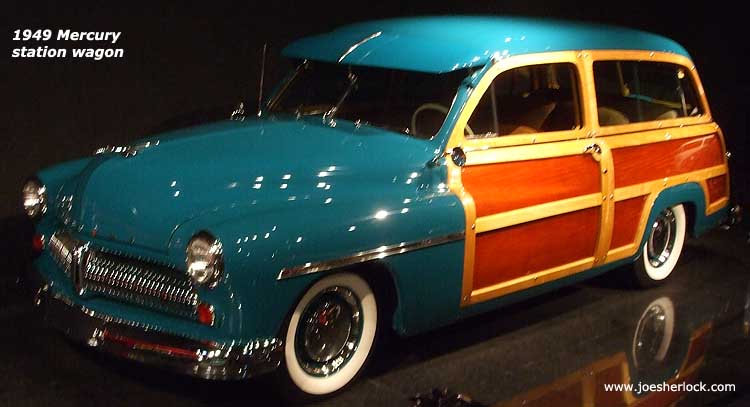
Farewell To Mercury
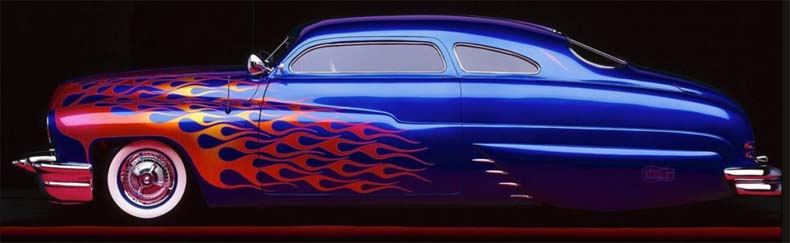
Wake Me When It's Over: Mercury's demise has been reported/predicted more than that of Fidel Castro but it looks like the End Is Nigh. Bloomberg has reported that Ford Motor Company plans to wind down the Mercury line "after sales plunged 74% since 2000."
"The automaker's top executives are preparing a proposal to kill Mercury to be presented to directors in July, said two sources, who asked not to be identified revealing internal discussions. Mercury, losing two of four models next year, will be starved of products and promotion."
Mercury sales peaked in 1978 at 579,498, when it had the slogan 'The Sign of the Cat.' Deliveries fell to 92,299 last year. As the U.S. auto market recovers, Mercury's sales are up but far less than Ford Motor's overall gain, according to researcher Autodata Corp. Mercury had 0.9% share of the U.S. market through April, unchanged from 2009.
John Wolkonowicz, an auto analyst with IHS Global Insight, said, "The reason Mercury failed throughout its existence is because Ford never wanted to spend any money on it. Ford always wanted to do it on the cheap and the results were what you'd expect." (added 5/28/10, permalink)
Update: On 6/2/10, FoMoCo made it official - Mercury will be discontinued in the fourth quarter of 2010. After too many years of brand neglect, marketing indifference, badge engineering and falling sales, Ford is putting The Big Cat to sleep.
Recipe For Failure: In 2006, there were 619 Lincoln-Mercury dealerships nationwide. Now, the number had dwindled down to just 357 at the beginning of 2009. How does one achieve such marvelous efficiencies? Simple. Choke off product development money. Decimate the product line. Move both brands downscale. Start rumors about discontinuing one of the brands. Stir lightly.
Sit back, let everything percolate and wait for the inevitable. (added 11/11/09, permalink)
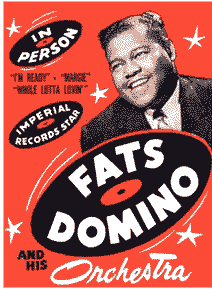 Nostalgia Act: Remember those folks who had a string of hits in the 1950s and/or '60s but not much since? If you see them around at all, they're performing their 'classics' before gray-haired geezer audiences. Nostalgia Act: Remember those folks who had a string of hits in the 1950s and/or '60s but not much since? If you see them around at all, they're performing their 'classics' before gray-haired geezer audiences.
They are still talented and competent entertainers but their stars sparkled for a while then dimmed. Think Fats Domino, Duane Eddy, Lesley Gore, Chuck Berry, Johnny Rivers, Little Anthony, etc.
Ford Motor Co. will end production of the Mercury Sable sedan this week, stripping its "mid-market brand" of yet another model. That will leave Mercury with only four models - including the Mountaineer and Grand Marquis, both of which are scheduled to be killed over the next couple of years.
The last exciting Mercury was the first-generation Cougar - and that was over 40 years ago. No hits since. The best Mercuries are now parked at old car shows, entertaining gray-haired geezer audiences. (added 5/20/09, permalink)
Obituary In Preparation: AutoBlog has noted: "According to Edmunds Inside Line and its source, the last Mercury to die will likely be the handsome and likable Milan sedan, which will receive a mid-cycle refresh that shall carry the model through to 2012. The Sable will likely expire in 2010 when the new Taurus rolls out without a Mercury counterpart. Ford rhetoric, however, still holds that Mercury and Lincoln are being repositioned, with Abe's brand taking over as the volume-seller of the pair." (added 6/17/08, permalink)
Death Watch: Rumors of Mercury's death have migrated from the automotive buff publications to the mainstream media. I've read news stories which begin by reminiscing about the Jimmy Dean Merc in 'Rebel Without a Cause'. And Steve McGarrett's various black Mercuries. (I liked the '67 Monterey coupe used in the pilot episode best.)
I wonder if any car buyers in the prime 30-45 age bracket even know what a Jimmy Dean Mercury looks like? Or remember the late Jack Lord playing McGarrett in 'Hawaii Five-O'? (Or that David Caruso in 'CSI Miami' is channeling Lord's ghost?)
Mercury sales peaked/plateaued in the late 1970s. And began to seriously decline around the dawn of this century. Sales in 2007 were about 168,000 units, down over 70% from peak. Mercury's sales have dropped more than 30 percent since April 2006 and show no sign of improving.
These days, the average Mercury buyer is 55, according to J.D. Power, well above the industry average of 47. Purchasers of the Grand Marquis model average 72 years of age.
Brand loyalty is flagging as well, with only 35% of Mercury owners opting to buy another one compared with the 45% industry average.
When introduced in 1939 as Ford's first foray into the mid-priced field, Mercury was priced about 50% higher than a Ford. The Lincoln Zephyr was priced 50% higher than Mercury. About 2.5 Fords were sold for every Merc. Mercury outsold Lincoln by roughly 3 to 1 in 1939. The Merc was priced in between Oldsmobile and Buick.
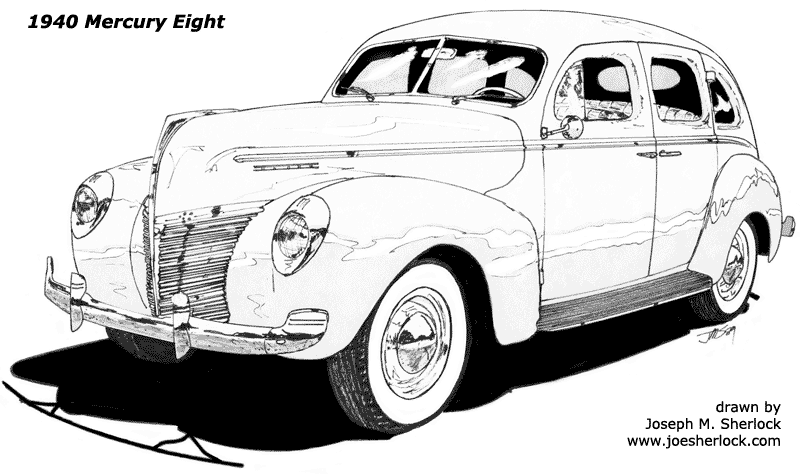
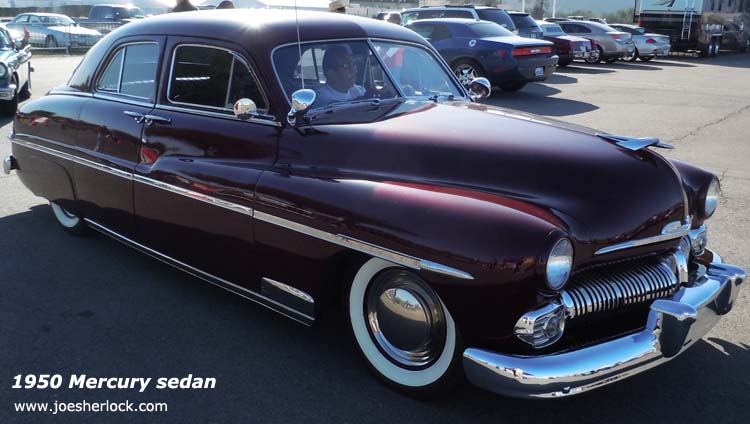
In the postwar era, FoMoCo prices began to converge. A 1950 Mercury cost about 30% more than a Ford. A Lincoln cost about 35% more than a Mercury.
In 1950, there were about 4 Fords sold for every Mercury and 10 Mercuries sold for every Lincoln.
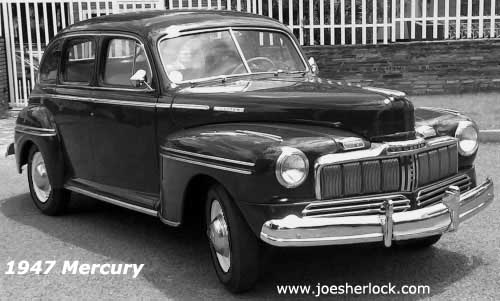
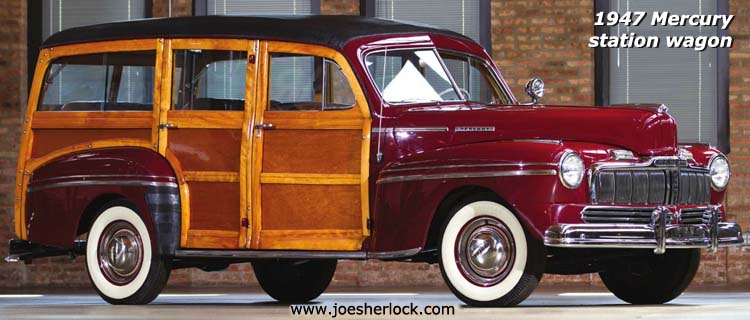
My dad once owned a '47 Merc (bought used in 1949). He liked it but said that Mercuries were just "gussied-up Fords." In those days, Buick was a doctor's car, Pontiac was a flashy salesman's ride, Oldsmobile was an engineer's vehicle of choice. Mercury was ... "well I wuz gonna get a Ford and had some money left over ..."
In the mid-Fifties, a decontented, entry-level Mercury Medalist model was introduced at a price which was only about 20% more than a comparable Ford Mainline stripper. By 1956, six Fords were being sold for every Mercury.
In 1958, FoMoCo's mid-price situation was further muddied by the introduction of two new products. The Edsel was priced about 10% below Mercury, cutting into Merc's low-end Medalist/Monterey segment. The new four-seater Ford Thunderbird was priced near the top of the Mercury range, undoubtedly stealing some of Merc's high-end Park Lane hardtop coupe sales. 1958 Mercury sales were about 45% lower than the sales figures for the '56 Big M. In 1958, about 38,000 T-Bird's were sold (jumping to 67,000 in 1959); less than 10,000 Park Lanes were produced.
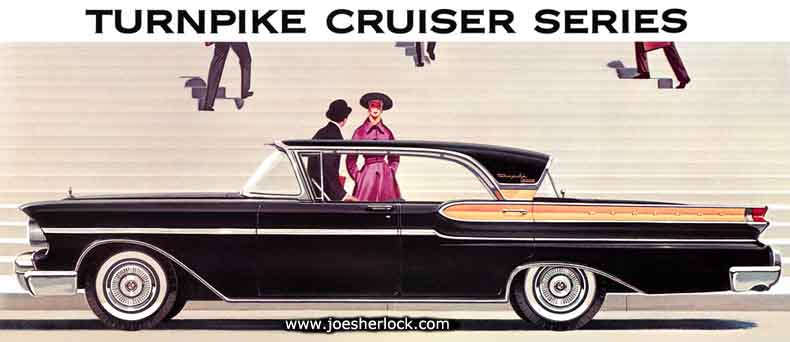
The Mercury Cougar was a handsome car when first unveiled in 1967. It was priced 15-20% above its Mustang sibling and, while the super-popular 'Stang outsold it by 3 to 1, the Cougar was considered an initial success. And it added a halo to the Mercury brand.
Over time, the Cougar's popularity slipped as did Mercury's as the brand increasingly became a rebadged Ford with a tweaked grille and taillights. Mercury is a virtually unknown brand outside of North America; Ford stopped selling it in Canada a couple of years ago. By early 2007, the average Lincoln-Mercury dealer sold only six Mercs per month.
Today, the Mercury Milan is priced very close to its Ford Fusion sibling. The other sibling, the Lincoln MKZ, costs about 25% more than a comparably equipped Ford Fusion - a premium much like Mercury used to command fifty-some years ago.
Lincoln has, therefore, become the new Mercury. And taken away Merc's reason for existence. No wonder the brand is in its final throes. (That odd racket emanating from a Mercury is not caused by build-quality problems. It's a death rattle.)
Mercury is not alone as a marque with no raison d'être.
The pricing and product differences between Buick, Pontiac, Chevy and Saturn are largely insignificant to most consumers. GM offers four brands when one could easily handle the task.
The Plymouth brand died when Dodge moved downscale to become the new cheap Chrysler Corp. brand. Or a Jeep with a gunsight grille.
Many years ago, Chrysler was a luxury brand; it now straddles between being a Plymouth substitute and a slightly gussied-up Dodge. The now-neglected Chrysler PT Cruiser was initially designed to carry Plymouth badges.
Mercury's demise seems inevitable but other brands from Detroit automakers will surely follow it to the grave. (added 5/29/08, permalink)
Whither Mercury? Or Wither Mercury? Ford is reporting that its Lincoln luxury brand will overtake Mercury in sales sometime in 2008. While this statement was intended to convey positive things about Lincoln, it telegraphs a more ominous message about Mercury.
Mercury had a decent November but overall sales are still very low. Buick sells more vehicles; that's nothing to brag about and is an indication of how far the Buick brand has fallen. Pontiac - another troubled brand - sells twice as many vehicles as Mercury. Even perpetual loser brand Saturn outsells Mercury, despite a drop in Saturn's November sales.
I have a soft spot in my heart for Mercury. My dad owned a black '47 sedan. I remember riding in it as a kid. And I always thought that the 1956 Mercury Turnpike Cruiser XM show car was super cool. I liked the Mercury Cougar of the 1960s better than the Mustang.
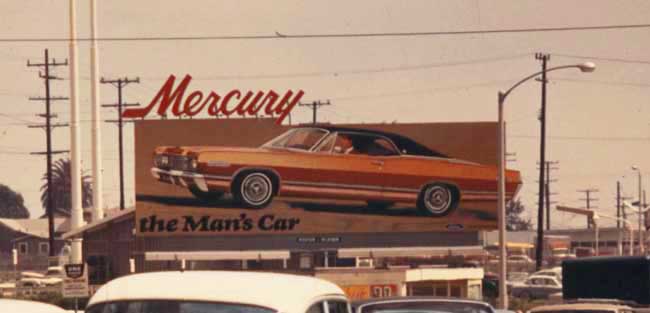
That said, Mercury is a nothing brand. It never found its own identity. It was always, as my dad used to say, a "gussied-up Ford." Mercury was introduced as a 1939 model to compete with GM's mid-price offerings (Buick, Pontiac, Oldsmobile, LaSalle). Mercury has soldiered on for 69 years as a Ford Alternative With Aspirations. Buick was a doctor's car, Pontiac was a flashy salesman's ride, Oldsmobile was an engineer's vehicle of choice. Mercury was ... "well I wuz gonna get a Ford and had some money left over ..."
Today's Mercury is the poster child for 'Badge Engineering' and is an almost-clone of its Ford-badged siblings. Mercury is a virtually unknown brand outside of North America; Ford stopped selling it in Canada a few years ago.
Meanwhile, the world has moved on. Multiple brand offerings are out. Only GM has many brands and - at this point - is probably sorry it does. Chrysler shed its Plymouth and DeSoto brands and sells only Chryslers, Dodges and Jeeps. Honda offers two brands - Acura and Honda. BMW sells BMWs and Minis. Even mighty Toyota offers only Toyota and Lexus. (Yes, Virginia, there is a Scion but it's a captive brand sold through Toyota dealers. I have never seen a stand-alone Scion showroom, although I live a sheltered life in the rural Pacific Northwest.)
I'm surprised Mercury is still around. Sales average less than eight vehicles per month per franchise. It is rumored that Merc will disappear after the 2009 model year. I won't be shocked. (added 12/10/07, permalink)
They Tried The Same Thing In 1986: Last Friday, the Detroit News reported: "Ford is reinventing Mercury as a niche marque designed to appeal to more women, minorities and shoppers who typically don't consider Ford products."
The '86 Mercury Sable was offered as a "stylish alternative" to the Ford Taurus. It was, apparently, the Softer Side of Ford, intended to entice women, gays and metrosexual yuppies (although the word 'metrosexual' had not yet been invented). And a young Mark Foley. And people on the rebound after a bad Merkur relationship. Or a bad Flavor Flav relationship.
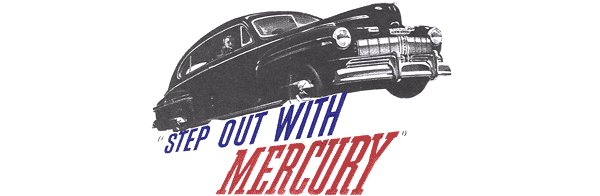
So ... what's new this time? And how will this help Mercury? Beats me.
Hey - speaking of 'beats me', if Mercury is seeking a new, untapped, niche market, here's an idea - bring back the Merkur. Butch it up with Stormtrooper black leather exterior trim and spiked chrome wheelcovers. Offer it with a ball-gag/airbag combo and sell it to bondage and discipline enthusiasts. (added 10/11/06, permalink)
Does The World Really Need Mercury? I have a soft spot in my heart for Mercury. My dad owned a '47 sedan. I remember riding in it as a kid. And I always thought that the 1956 Mercury Turnpike Cruiser XM show car was super cool. And I liked the Mercury Cougar of the 1960s better than the Mustang.
That said, Mercury is a nothing brand. It never found its own identity. It was always, as my dad used to say, a "gussied-up Ford." Mercury was introduced as a 1939 model to compete with GM's mid-price offerings (Buick, Pontiac, Oldsmobile, LaSalle). Mercury has soldiered on for 67 years as a Ford Alternative With Aspirations. Buick was a doctor's car, Pontiac was a flashy salesman's ride, Oldsmobile was an engineer's vehicle of choice. Mercury was ... "well I wuz gonna get a Ford and had some money left over ..."
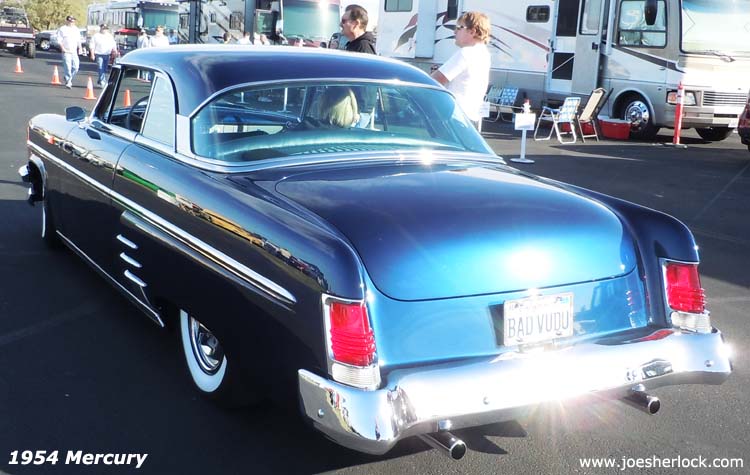
Today's Mercury is the poster child for 'Badge Engineering' and is an almost-clone of its Ford-badged sibling. Mercury is a virtually unknown brand outside of North America; Ford stopped selling it in Canada a couple of years ago.
Meanwhile, the world has moved on. Multiple brand offerings are out. Only GM has many brands and - at this point - is probably sorry it does.
Chrysler shed its Plymouth and DeSoto brands and sells only Chryslers, Dodges and Jeeps. Honda offers two brands - Acura and Honda. BMW sells BMWs and Minis. Even mighty Toyota offers only Toyota and Lexus. (Yes, Virginia, there is a Scion but it's a captive brand sold through Toyota dealers. I have never seen a stand-alone Scion showroom, although I live a sheltered life in the rural Pacific Northwest.)
It is time to dump Mercury and focus Ford's ever-shrinking resources on its other domestic brands - Lincoln and Ford.
Such a move may not be enough to save Ford. But it will sure make GM envious. (added 9/21/06, permalink)
Marauding: The Florida Highway Patrol has now has 18 new Mercury Marauders that will be used to crack down on aggressive driving. Other people's aggressive driving, that is. This is a good move because Marauders make good stealth cars - so few have been sold that nobody knows what they are!.
Two years ago, one of my car buddies was invited to a "by invitation only" preview of the $39,970-sticker Marauder. He was less than impressed: " ... a Barge is a Barge is a Barge. The Mustang Cobra-sourced DOHC 4.6-liter, with fuel injection, the four-speed auto tranny with its shifter in a floor console, the black paint (with orange peel) and the overly dark windows have all been done before."
The dealership ambiance was less than impressive as well: "The finger food was poor. Little sandwiches with the crusts cut off. Little cakes and candies - hard as bricks, tasted of licorice. The white wine was generic, poured from those cardboard 5-liter boxes. Rest of the fare was totally forgettable."
Some coming out party. And they're not even bothering with a going-away party. Just discount those ol' Mercs enough that the cops'll buy 'em.
Recently, I mentioned Mercury to a friend (a guy who appreciates and owns cool cars but not a total car nut) who asked me in all seriousness, "Do they still make Mercury?"
That question sums up Mercury's troubles in one word - invisibility. (added 12/10/04, permalink)
Other Pages Of Interest
copyright 2004-20 - Joseph M. Sherlock - All applicable rights reserved
Disclaimer
The facts presented on this website are based on my best guesses and my substantially faulty geezer memory. The opinions expressed herein are strictly those of the author and are protected by the U.S. Constitution. Probably.
Spelling, punctuation and syntax errors are cheerfully repaired when I find them; grudgingly fixed when you do.
If I have slandered any brands of automobiles, either expressly or inadvertently, they're most likely crap cars and deserve it. Automobile manufacturers should be aware that they always have the option of giving me free cars to try and change my mind.
If I have slandered any people or corporations, either expressly or inadvertently, they should buy me strong drinks (and an expensive meal) and try to prove to me that they're not the jerks I've portrayed them to be. If you're buying, I'm willing to listen.
Don't be shy - try a bribe. It might help.
|
|