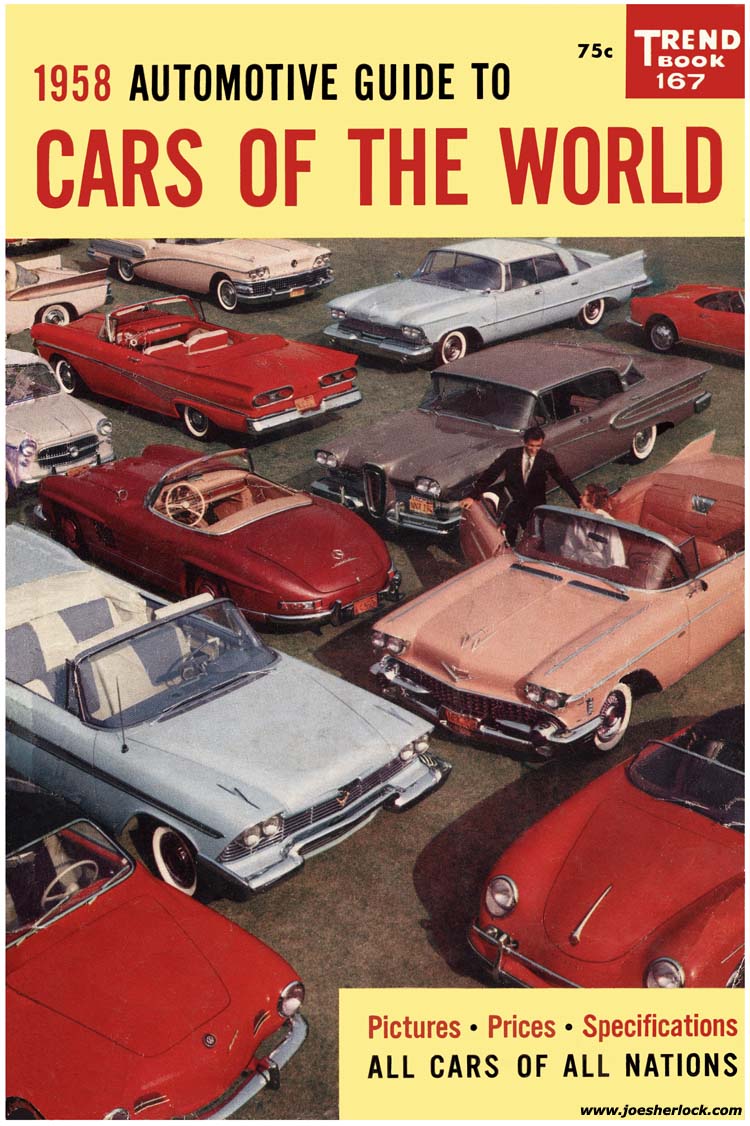
The Real Story Of The Edsel
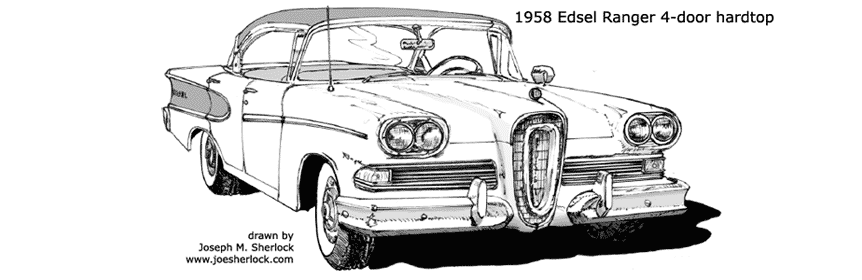
It has been over sixty years since the debut of the Edsel. The grand unveiling was September 4, 1957, designated as "E-Day" by Ford Motor Company. In 2007, Peter Carlson of the Washington Post penned a hit job titled: 'Edsel: The flop heard 'round the world'. The article regurgitated the conventional wisdom that the Edsel was the Mother Of All Failures: the design was silly, the public hated it, Ford's management was a gang of hapless fools, etc.
I beg to differ.
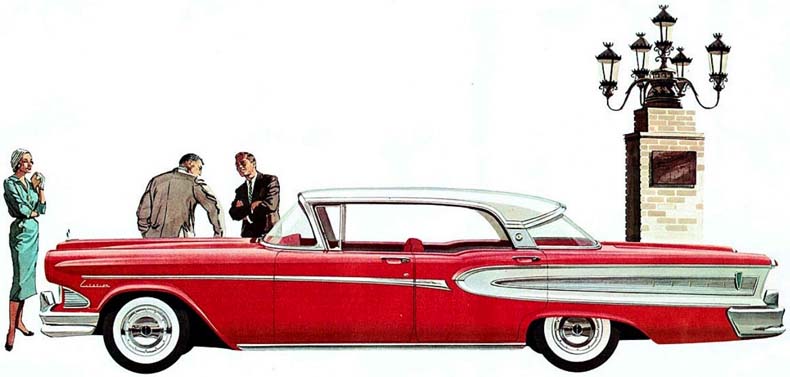
The Edsel was launched by Ford Motor Company as a 1958 model in the medium- or mid-priced field. Ford invested $350 million in the car and pulled it from the market in late 1959, citing poor sales. That's equivalent to about $2 billion in today's currency.
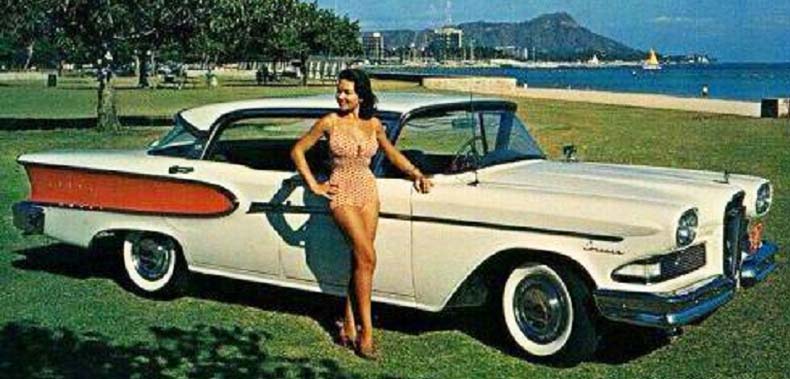
Many experts have claimed the problem with the Edsel was the name. It's certainly not a great name for an automobile but it's certainly no worse as an abstract name than, say, Oldsmobile (a car for Old People?), Pontiac (an Indian Chief), Honda, or Nissan. People said, "Edsel sounds like pretzel." So what. Honda rhymes with Rhonda. Ironically, Ford Motor Company even hired a poet, Marianne Moore, as a consultant to help pick a name for their new car brand. Her suggestions included Intelligent Bullet, Mongoose Civique, and Utopian Turtletop. Exasperated Ford executives finally named the car after Henry Ford's only son, Edsel, who died in 1943. Edsel certainly sounds a lot better than Utopian Turtletop. The problem with the Edsel wasn't the name.
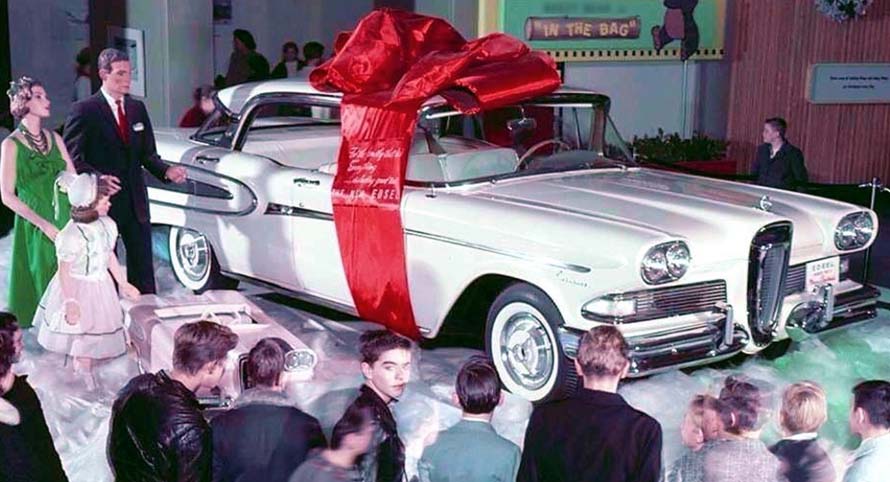
Others in the automotive industry have said that Edsels had very poor quality, which drove customers away. To be sure Edsels had quality problems, as did most of the cars coming off the assembly lines at Ford, General Motors and Chrysler in 1958. No one ever named the 1950s "The Quality Decade." Edsels were made on the same assembly lines as Fords and Mercurys; their quality was about the same.
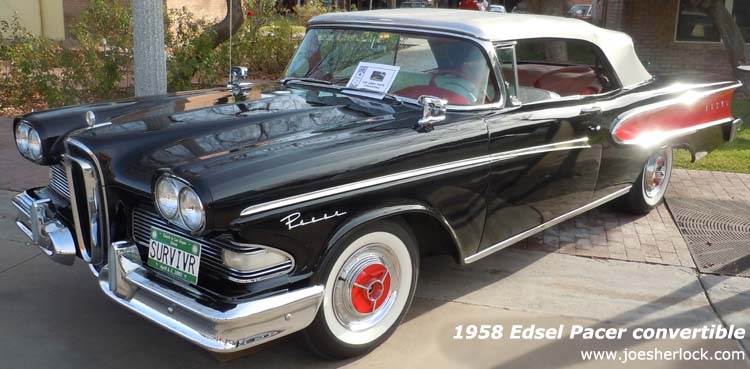
People have said the timing was bad for introducing the Edsel. That's certainly true. Henry Ford II himself said so in an interview shortly before his death. The so-called 'Eisenhower Recession' began in 1957 and extended through 1958. It was not a good time to introduce a new product. Car sales in general were in a tailspin, but cars introduced in bad economic times will survive as long as the parent company has the capital, cash flow and moxie necessary to stay the course. Plymouth was launched just before the beginning of the Great Depression. Saturn was introduced just in time for the recession of 1990-91. Ford Motor Company certainly had the resources to stay the course with the Edsel, but they lacked the commitment to do so, and that's the rub.
Let's look at why the Edsel was developed. In the mid-’50s, Ford Motor Company had only one medium-priced car, Mercury. General Motors had three Pontiac, Oldsmobile, and Buick. Chrysler had three - Dodge, DeSoto and Chrysler. Ford wanted another brand to be less expensive than Mercury and compete directly with Dodge and Pontiac, which represented the lower end of the mid-priced spectrum. And so the Edsel was born.
The 1958 Edsel featured dramatic styling, a high performance V-8 engine, and distinctive technical innovations such as push button transmission controls on the steering wheel hub. The Edsel was a hot performer on the road and did respectably in the showroom, too. During the 1958 model year, 63,110 Edsels were produced. Edsel outsold DeSoto, Chrysler, and Studebaker. For every two Mercurys sold, one Edsel was sold. Not bad for a car in its first year of life, especially when you consider that Mercury was a well-established brand that had almost 20 years of brand loyalty and product history behind it.
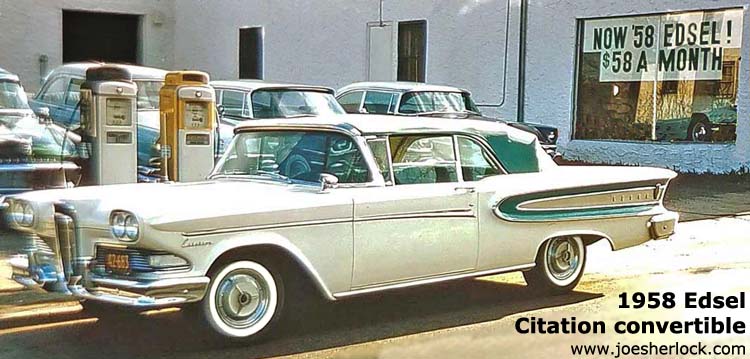
In 1959, Edsel sales nose-dived. Here's why: First, the distinctive styling was made blander. Second, the car was now offered with an economy six-cylinder engine as an option - hardly the way to bolster the car's performance image. The model line-up was substantially reduced. So were the number of dealers. The innovative push-button transmission controls were gone, replaced with the conventional column lever used in Fords. No wonder the car bombed.
All of these changes were made at the behest of Ford Group Vice-President, Robert McNamara, later U.S. Secretary of Defense during the Kennedy and Johnson Administrations. McNamara didn't like the Edsel. It looked too flashy, he thought, and it offended his sense of what an automobile should be - a no-nonsense, practical car. McNamara was a big fan of the bland and compact Ford Falcon, introduced about the same time the Edsel died.
At an August 28, 1957 press preview dinner, before the Edsel had even been introduced to the public, McNamara told an associate, "I've got plans for phasing it out." One automotive historian wrote that the Edsel would have survived if McNamara hadn't "axed it to bolster his ego."
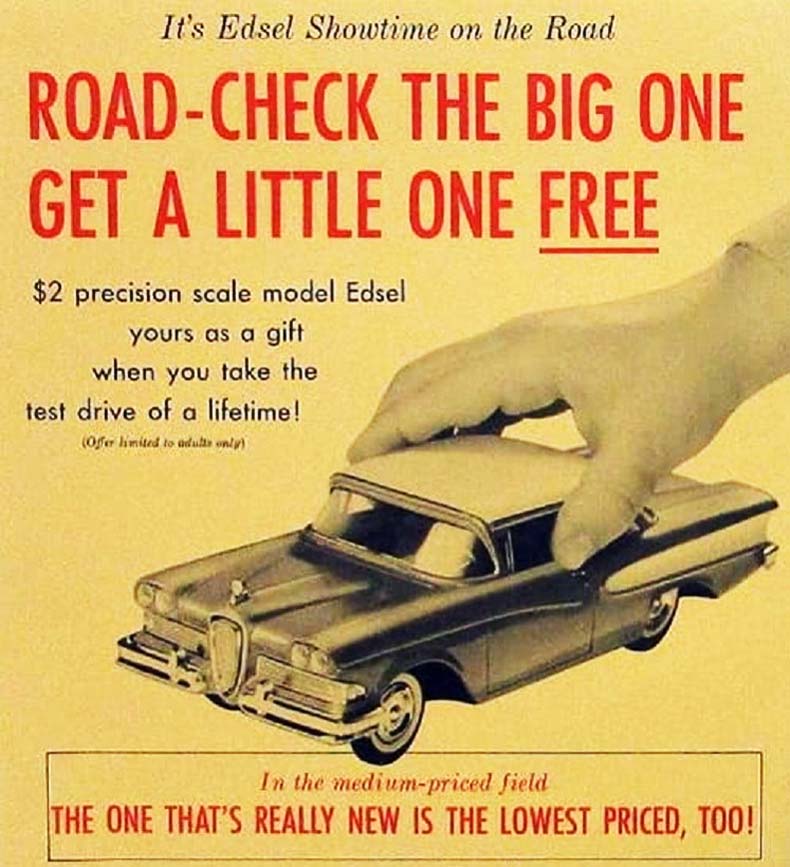
In January 1958 (only four months after introduction), McNamara disbanded the independent Edsel Division, folding it into the Lincoln-Mercury Division. Edsel dealers were soon told to get other franchises to represent, killing dealer enthusiasm and support. In November of 1959, a few weeks after the introduction of the 1960 Edsel, production ended for good.
So .... while the Edsel was a mere infant, McNamara stabbed it in the back - multiple times. No wonder the brand didn't survive.
McNamara moved on, overseeing the Vietnam War and, later, the World Bank. (Hmmm. Look how those things turned out. Spot a trend here?)
|
|
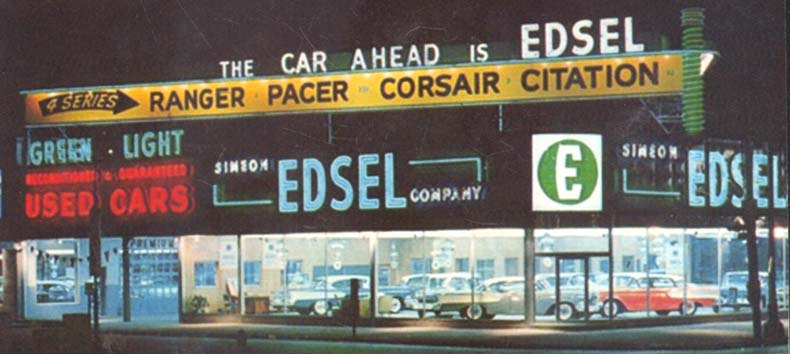
This photo was taken shortly after the grand opening of Simeon Edsel Co. of Columbus, OH. It was a father-son partnership; George D. and George R. Simeon headed this dealership. They also owned Columbus Buick. Simeon was one of three Edsel dealerships in Columbus. The Simeons closed their Edsel store in May 1958, eight months after its grand opening. The building later became a Buick showroom.
|
Ford Motor Company reportedly lost $275 million on the short-lived Edsel project. Eugene Bordinat, then styling supervisor at Lincoln-Mercury, said, "Edsel, they keep talking about the $250,000,000 losses, those were only of record after it became the Edsel Division. All of the special projects part of it, which was the total development of the line of cars and all promotional work, etc., leading up to the introduction of the car, was "absorbed" by the various other divisions, and so the real cost was astronomical because that's the heavy-hitting part of any kind of a program."
There are the inevitable accusations about "FoMoCo's middle-management morons." The reality is Edsel was part of Ford Motor Company's plan to expand their car line into the mid-priced automotive field.
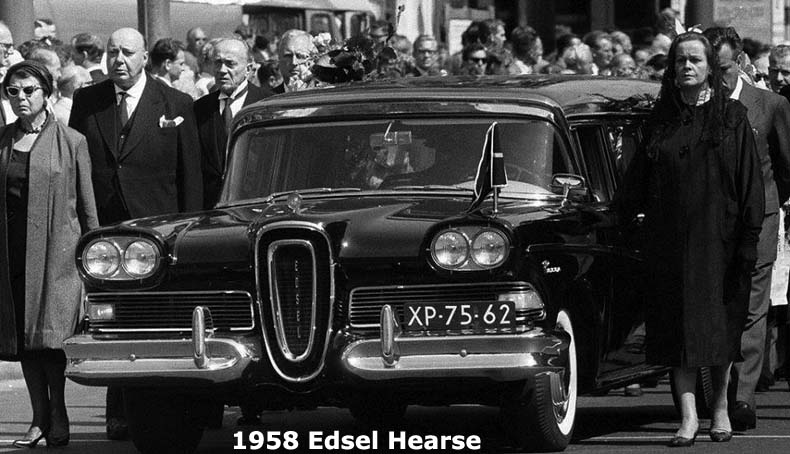
The same management group that developed the Edsel also developed the 1958 four-seater Ford Thunderbird. While automotive purists bemoaned the demise of the cute little two-seater T-Bird, the larger four-seat model quadrupled sales. It defined the emerging market for the mid-priced personal luxury coupe and it was a success for almost 40 years. It also gave Ford increased market share in the medium-priced field. By introducing the Thunderbird and the Edsel simultaneously, Ford hedged their bets. (McNamara couldn't kill the 'Bird, even if he wanted to; it was already a proven success.)
Sadly, the uniquely-styled Edsel didn't survive but, in fairly short order, the success of the four-seater T-Bird more than made up for Edsel's financial losses. (originally posted 9/7/07)
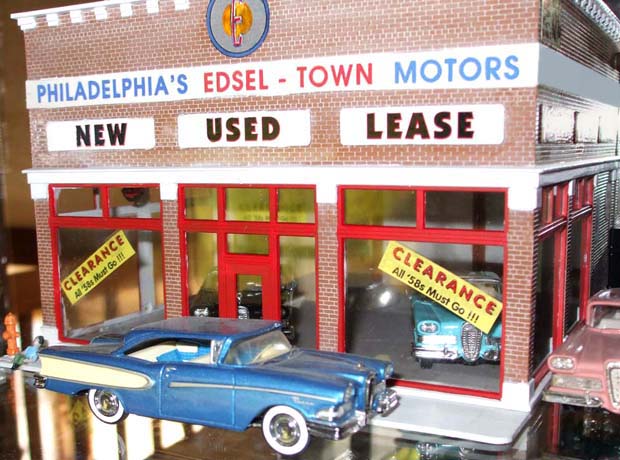
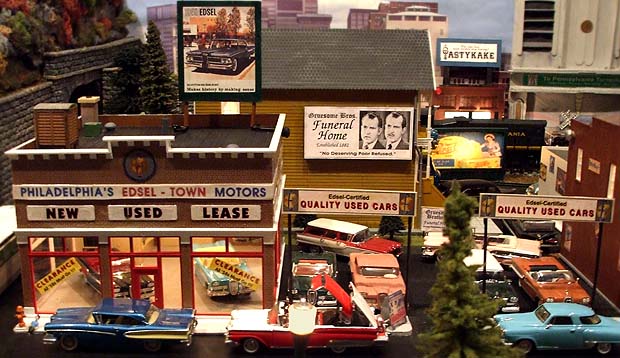
Edsels In Scale: On my O-gauge train layout, there is Edsel-Town Motors, with a 1:43 scale blue '58 Edsel Pacer two-door hardtop coupe parked in front. This resin-bodied model was made by Swiss manufacturer Zaugg in 1984 or so.
The dealership is loosely based on George Roth Edsel, once located at 5115 Frankford Avenue, between Pratt & Dyer Sts. in Northeast Philadelphia, PA. (Roth later sold foreign cars from that location, including MGs and Austin Healeys. Roth Buick was located less than a mile away on 4661 Paul Street.)
Inside the showroom are two 1:43 scale Yat-Ming '58 diecast convertibles - one turquoise (with white side panels) and one black (with red side panels). The pink Edsel Citation (partly visible at the side of the building) is a Brooklin model in the original-issue color from 1986.
.
|
Remember When: 1958
|
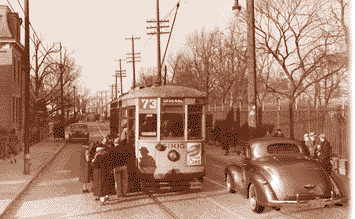 In 1958, the U.S. experienced the worst recession since World War II. Jimmy Hoffa took over the Teamsters Union; Nikita Kruschev took over the USSR. In 1958, the U.S. experienced the worst recession since World War II. Jimmy Hoffa took over the Teamsters Union; Nikita Kruschev took over the USSR.
At Arlington Cemetery, the Tomb of the Unknown Soldier was completed. In March, Elvis Presley was inducted into the U.S. Army and became a Very Well-Known Soldier. First-class letter postage increased from 3¢ to 4¢. Explorer I, the first U.S. satellite, was launched.
Starting in 1958, automobile manufacturers were required to post factory sticker prices in the windows of all cars sold in the U.S.
New products included Sweet 'n Low and Bic pens. The hula hoop was introduced; 25 million were sold in the first four months. The first Pizza Hut opened in Wichita, Kansas.
New TV shows included 'Peter Gunn', 'The Rifleman' and '77 Sunset Strip'.
 'Volare' was awarded record of the year at the Grammys. Other hits included 'At The Hop' by Danny and the Juniors, Frank Sinatra's 'Witchcraft', Chuck Berry's 'Johnny B. Goode', Jerry Lee Lewis' 'Great Balls of Fire', Get A Job' by The Silhouettes and 'Tom Dooley' by The Kingston Trio. Rock and roller Little Richard quit the music biz and went to preacher school at an Alabama Negro college run by Seventh Day Adventists. 'Volare' was awarded record of the year at the Grammys. Other hits included 'At The Hop' by Danny and the Juniors, Frank Sinatra's 'Witchcraft', Chuck Berry's 'Johnny B. Goode', Jerry Lee Lewis' 'Great Balls of Fire', Get A Job' by The Silhouettes and 'Tom Dooley' by The Kingston Trio. Rock and roller Little Richard quit the music biz and went to preacher school at an Alabama Negro college run by Seventh Day Adventists.
Famous people born in 1958 Include Michael Jackson, Ellen DeGeneres, Madonna, Prince, Kevin Bacon, rapper Ice-T, Drew Carey, rocker Joan Jett, Jeff Foxworthy, Jamie Lee Curtis, Sharon Stone and Andrea Bocelli.
New movies included 'Gigi', 'South Pacific' and 'Cat on a Hot Tin Roof'. In 1958, an unknown named Steve McQueen appeared in a B-grade horror flick, 'The Blob'. The title song became a minor hit that year; it was written by another unknown, Burt Bacharach. In 1958, a movie ticket cost 65¢.
Tropical fish were the most popular pet for Americans in 1958; 120 million of them resided in tanks in American homes. (On any given morning, a million or two were found floating upside down.)
Lana Turner's daughter, Cheryl Crane, fatally stabbed her mother's mobbed-up boyfriend, Johnny Stompanato, in Lana's Beverly Hills mansion.
Other deaths included Pope Pius XII, songwriters Lew Brown and Harry Revel, blues composer and musician W. C. Handy, actor Tyrone Power, radio and television actor Tim Moore (he played The Kingfish on 'Amos 'n' Andy'), rocker Chuck Willis who performed 'C.C. Rider' (a #1 R&B hit as well as a #12 pop hit in 1957. Willis' version of the old blues song gave birth to the dance craze The Stroll), Elvis' mom, Gladys Presley, and movie producer Mike Todd, killed in an New Mexico air crash (he was married to Elizabeth Taylor).
The NY Yankees won the World Series, beating the Milwaukee Braves 4 to 3.
|
Other Pages Of Interest
| blog: 'The View Through The Windshield' |
| greatest hits: index of essays & articles | blog archives | '39 Plymouth |
| model train layout | about me | about the blog | e-mail |
copyright 2007-21 - Joseph M. Sherlock - All applicable rights reserved
Disclaimer
The facts presented on this website are based on my best guesses and my substantially faulty geezer memory. The opinions expressed herein are strictly those of the author and are protected by the U.S. Constitution. Probably.
If I have slandered any brands of automobiles, either expressly or inadvertently, they're most likely crap cars and deserve it. Automobile manufacturers should be aware that they always have the option of trying to change my mind by providing me with vehicles to test drive. I'll dutifully report my road test impressions on this car blog.
If I have slandered any people or corporations, either expressly or inadvertently, they should buy me strong drinks (and an expensive meal) and try to prove to me that they're not the jerks I've portrayed them to be. If you're buying, I'm willing to listen.
| |